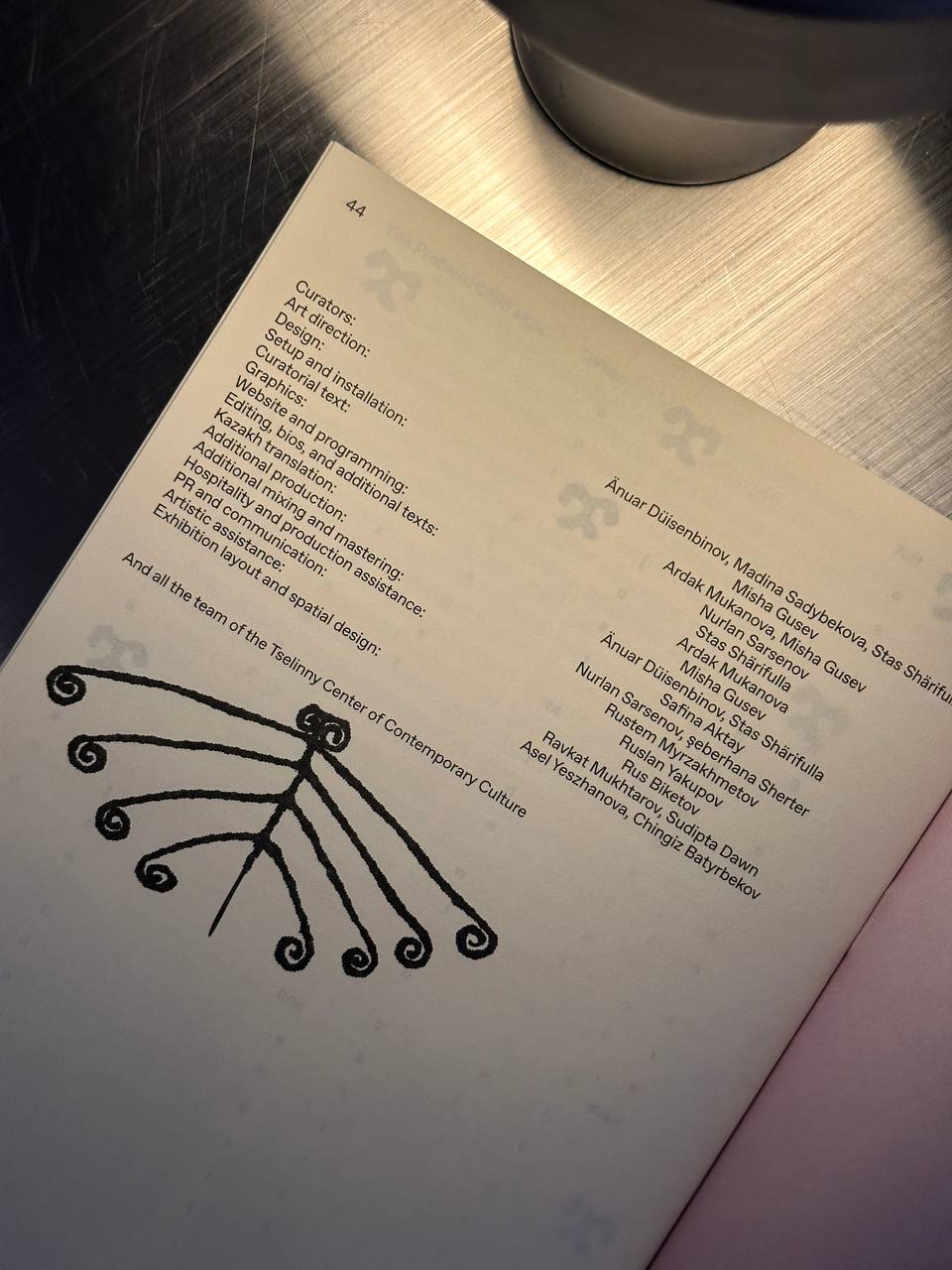
Project collaborators: Misha Gusev, Ardak Mukanova, Hmot, Anuar Duisenbinov, Madina Sadybekova, Saida Suleimenova, Zhoodar Dzheenbek.  

Sound and Wind Bound Together in Planes Both Audible and Unseen

Ardak Muminova and I designed the visual language for the inaugural Korkut Sound Arts Triennale. Initiated by the Tselinny Center, the international project brings together contemporary artists to explore the concept of sound through the lens of wind, land, and Central Asian desert heritage. It is a complex, multicultural event that deals simultaneously with everyday physical realities and deeply spiritual ideas.
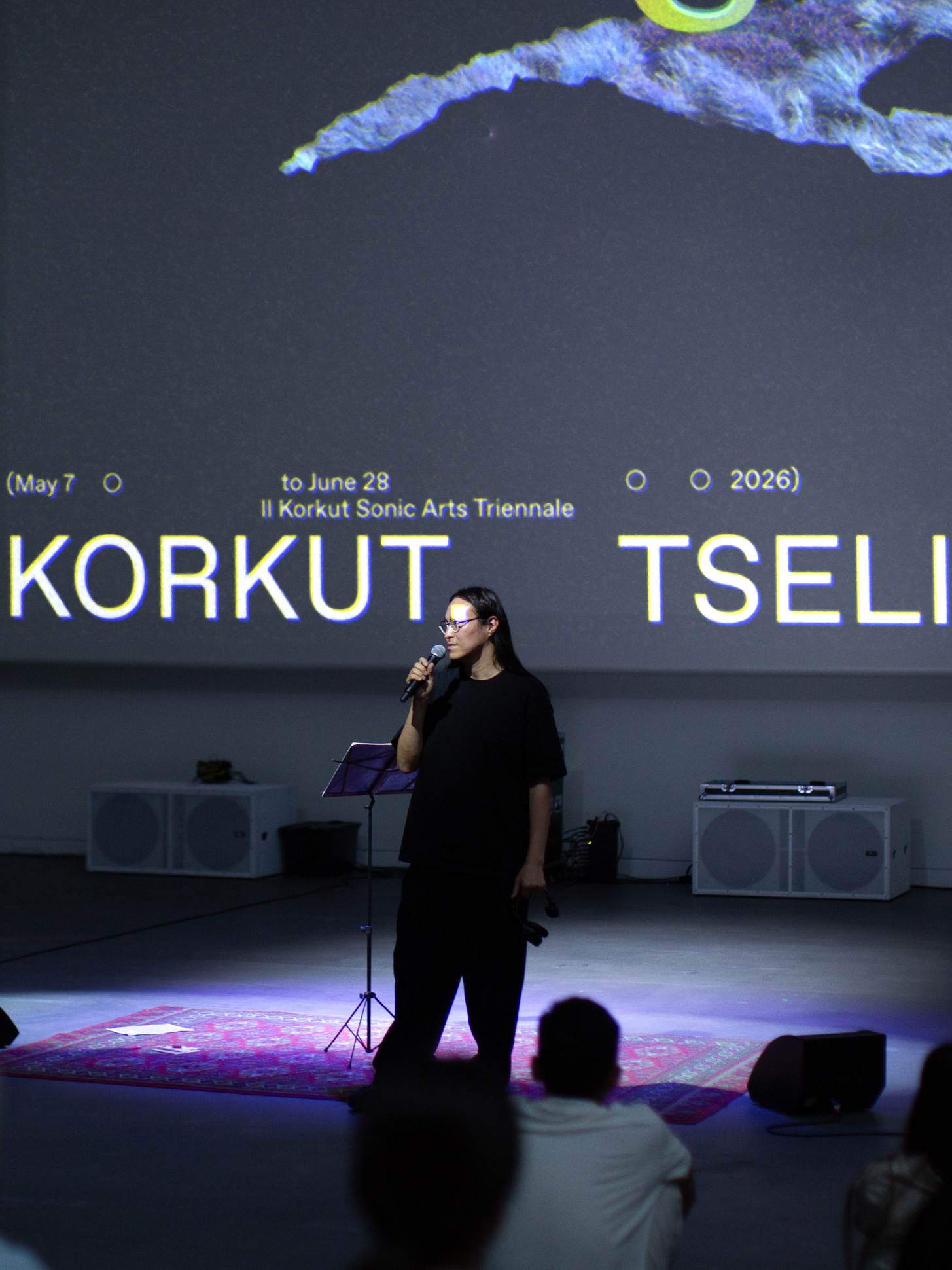
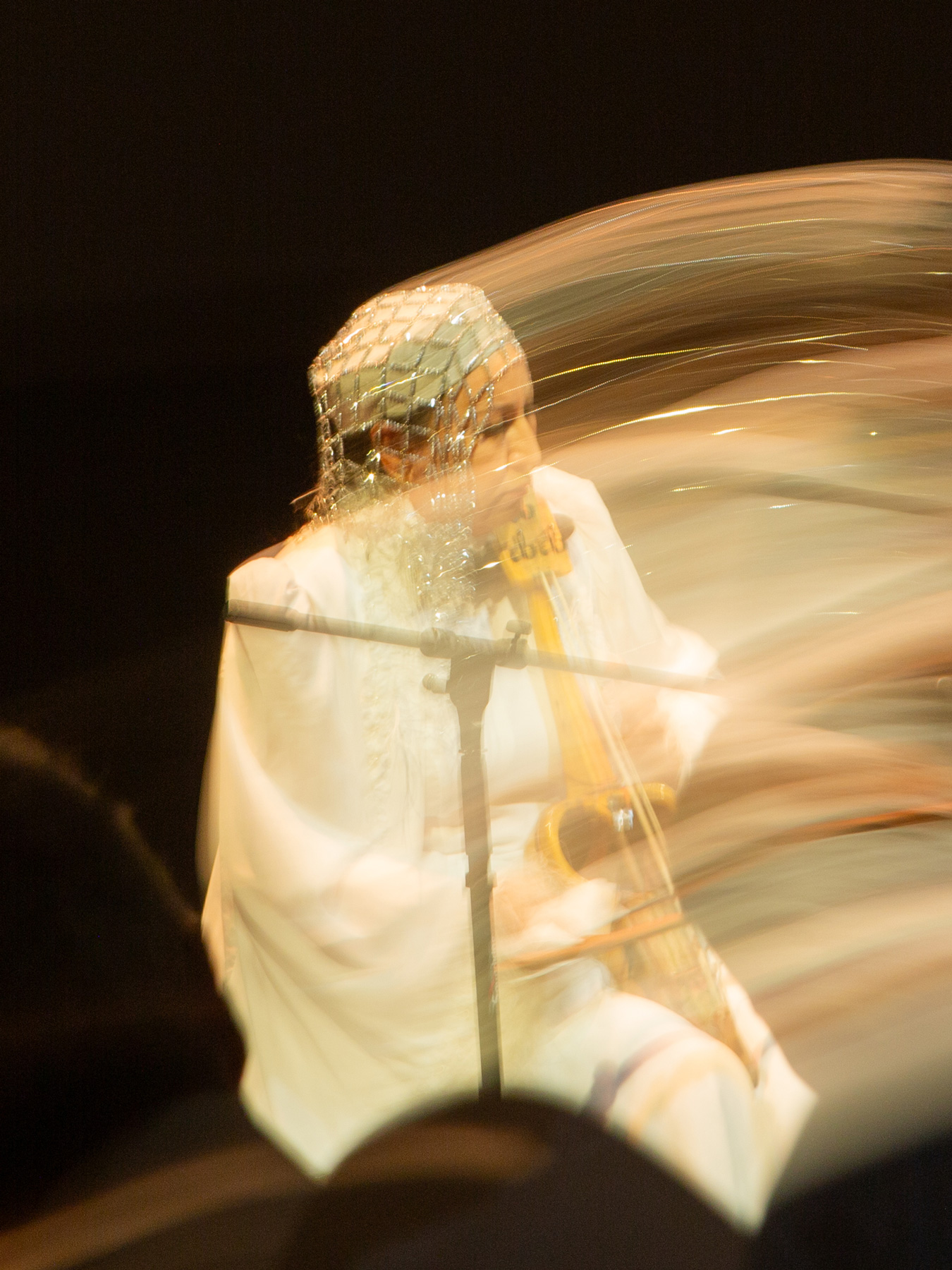
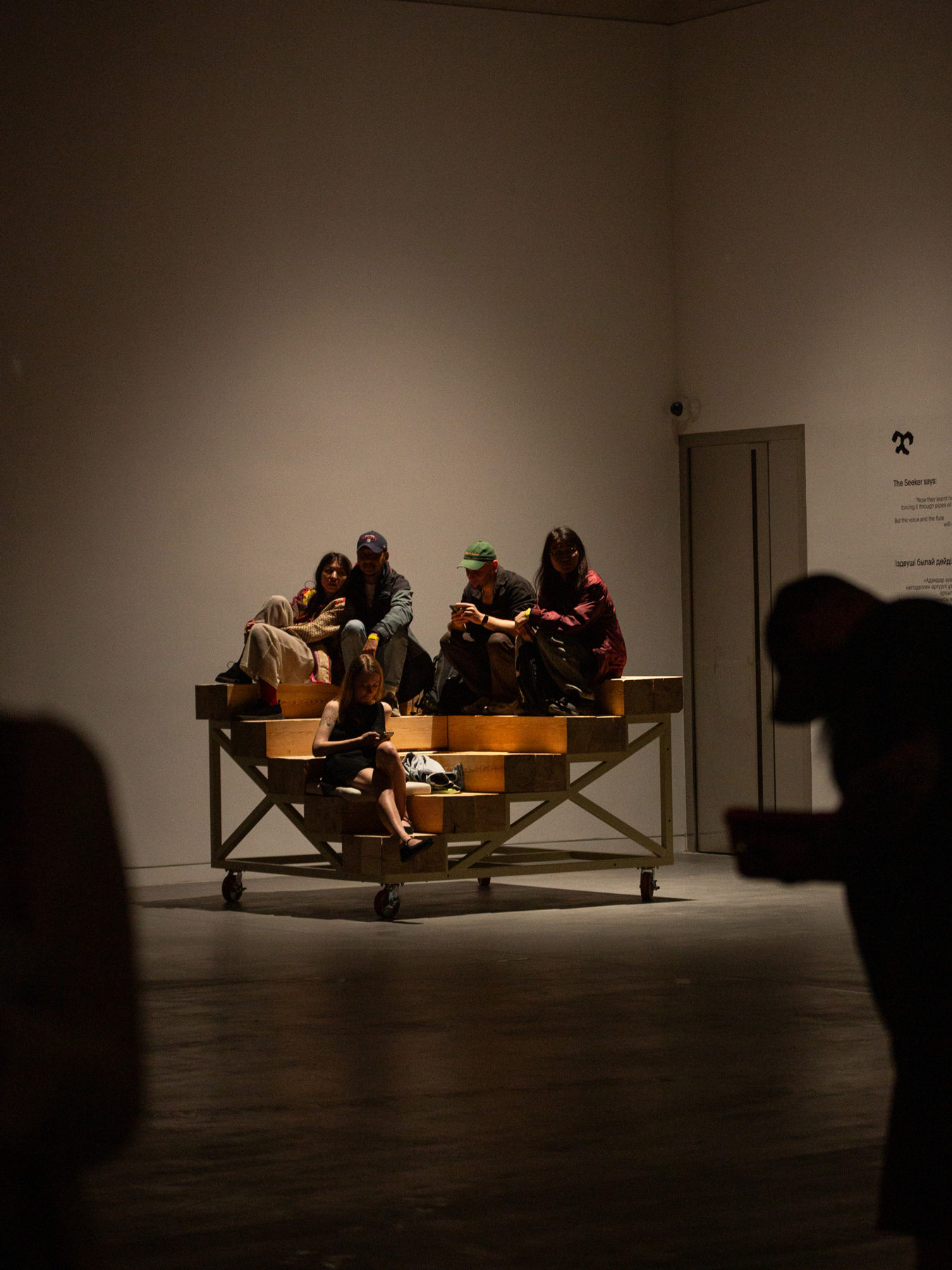
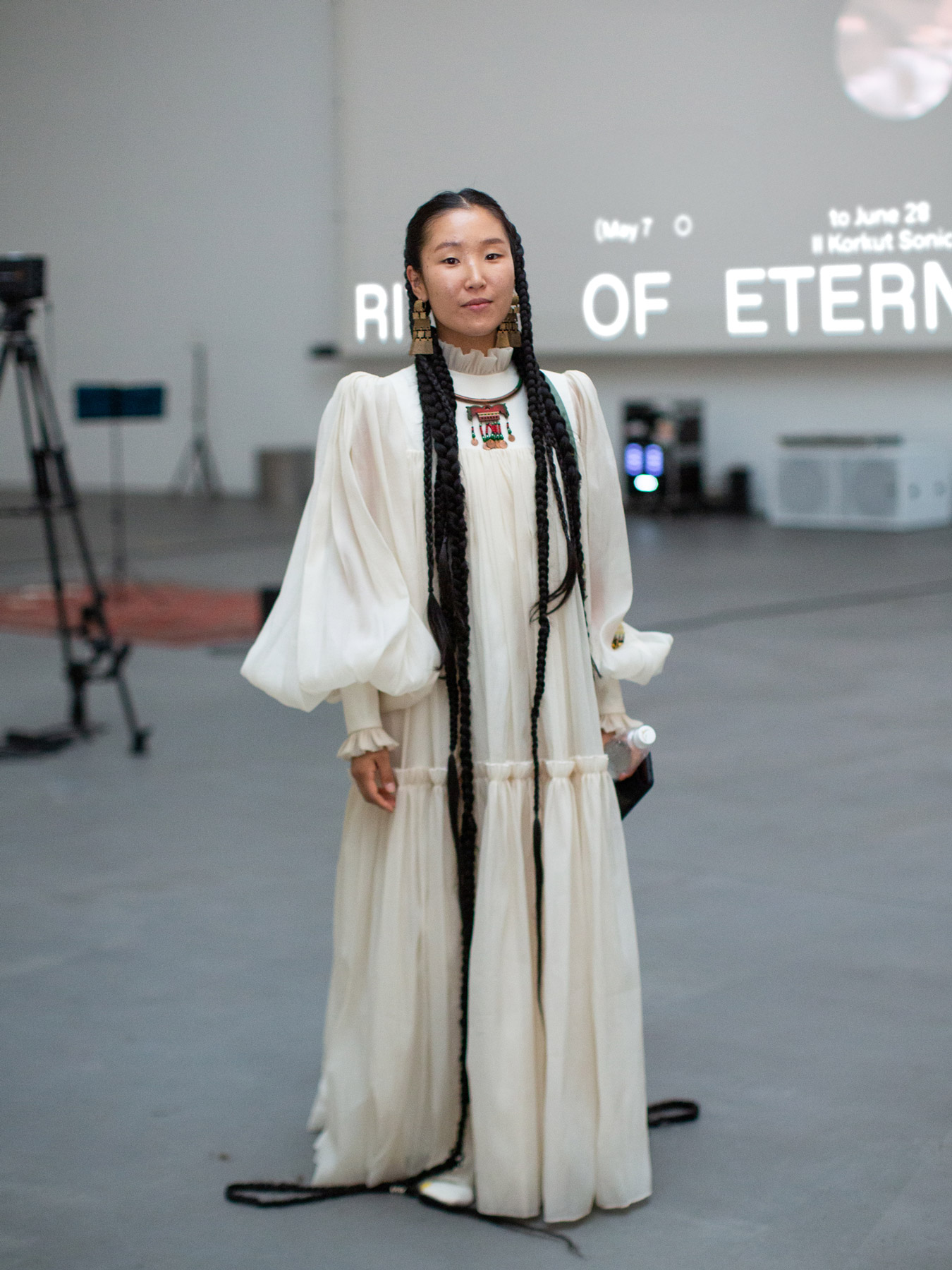
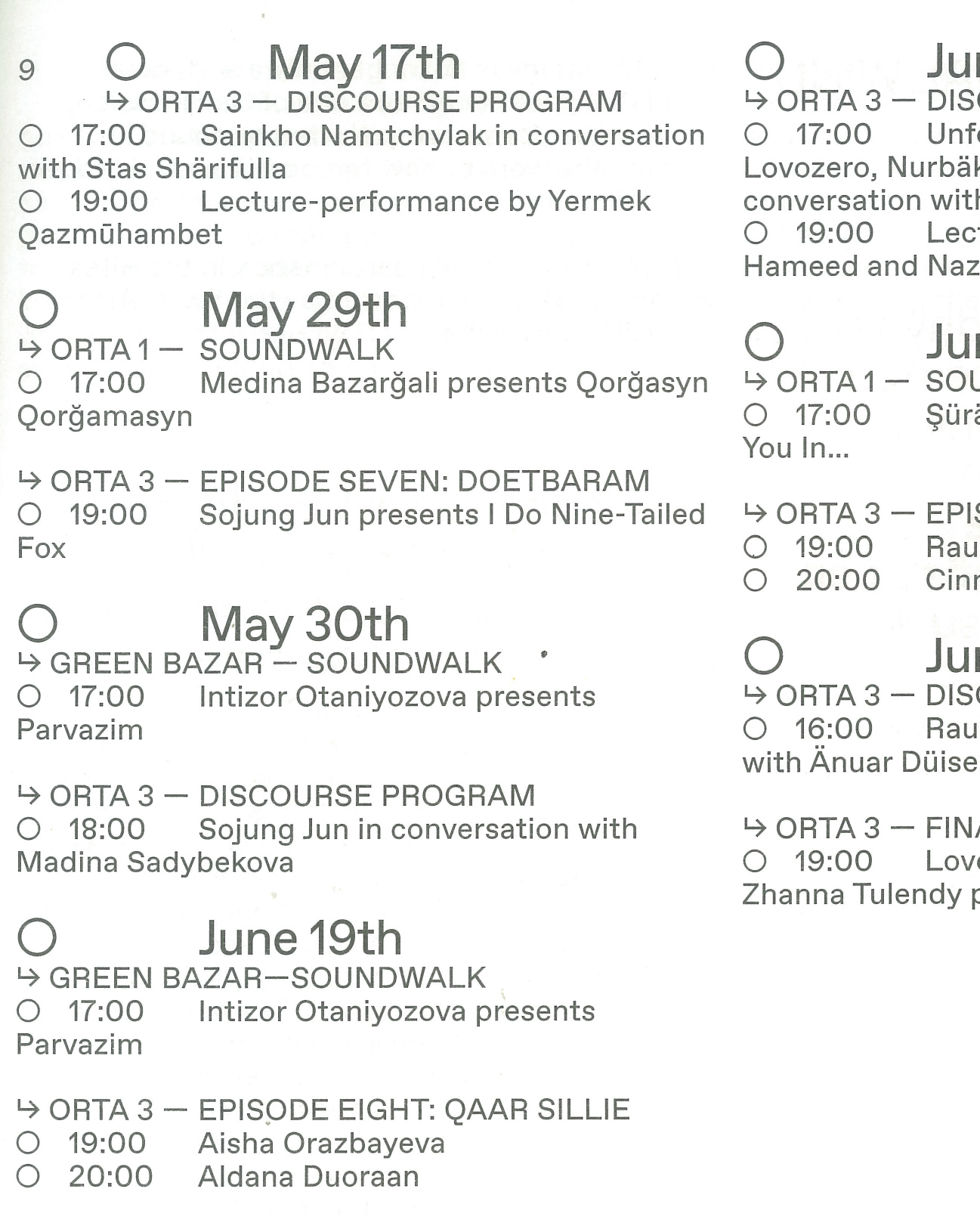
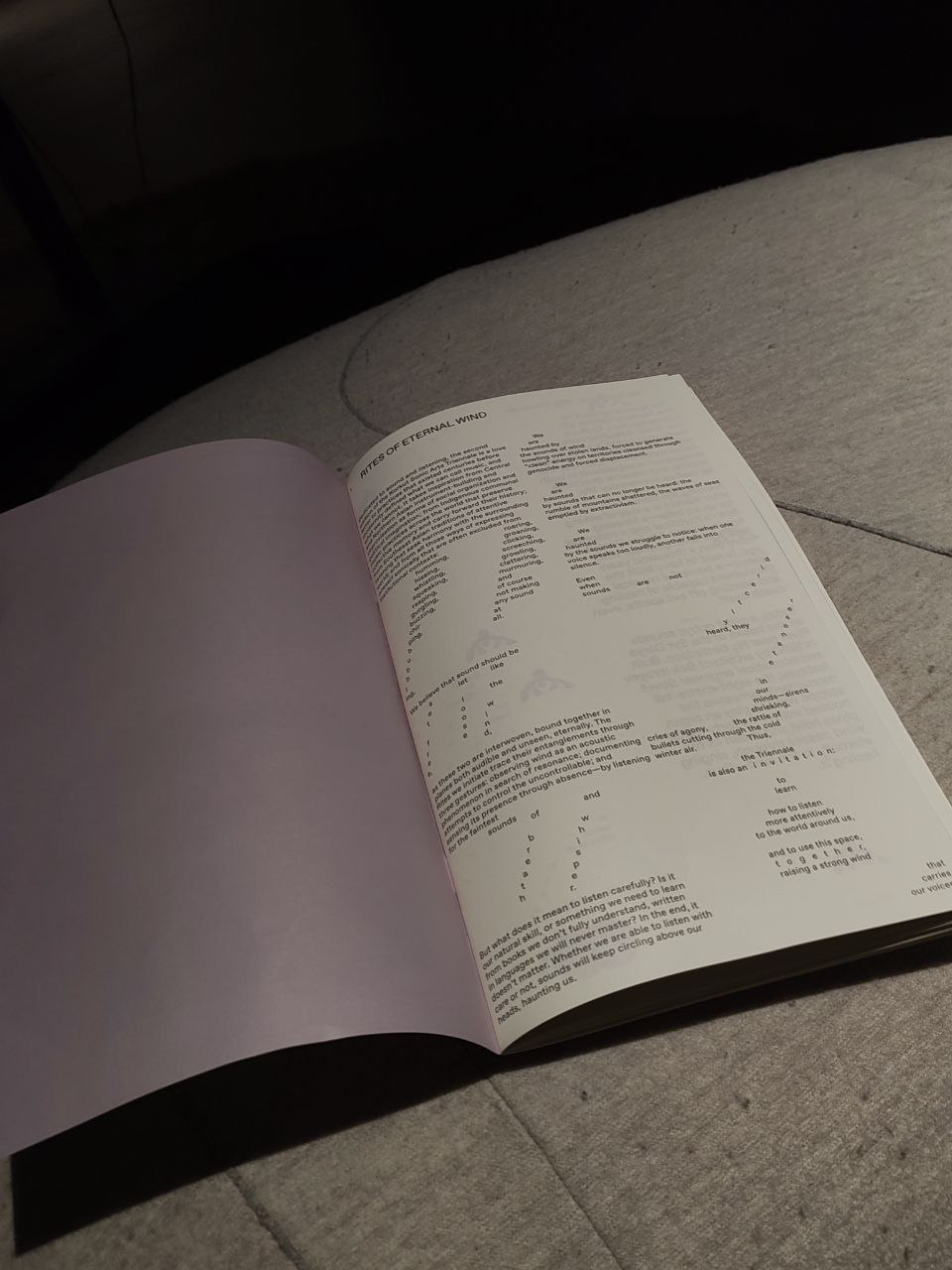
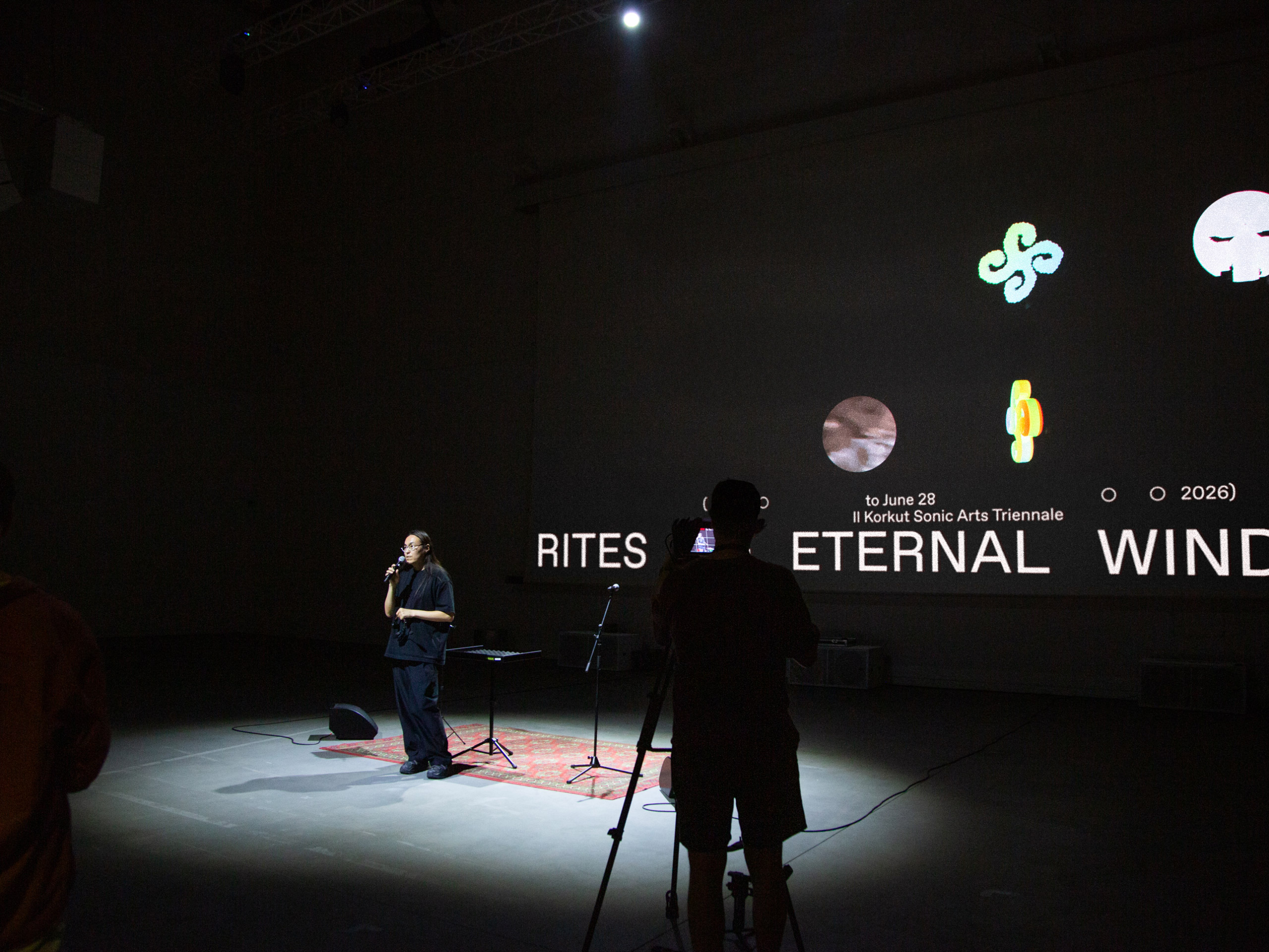
Dedicated to sound and listening, the Triennale created a space for a wide range of sonic practices without restricting them by institutional boundaries. Over the course of two months, Rites of Eternal Wind hosted sound installations and live events, listening sessions and soundwalks, hybrid lectures, discussions and workshops, somatic performances and explorations of sonic rituals and environments where sound was absent or even impossible.
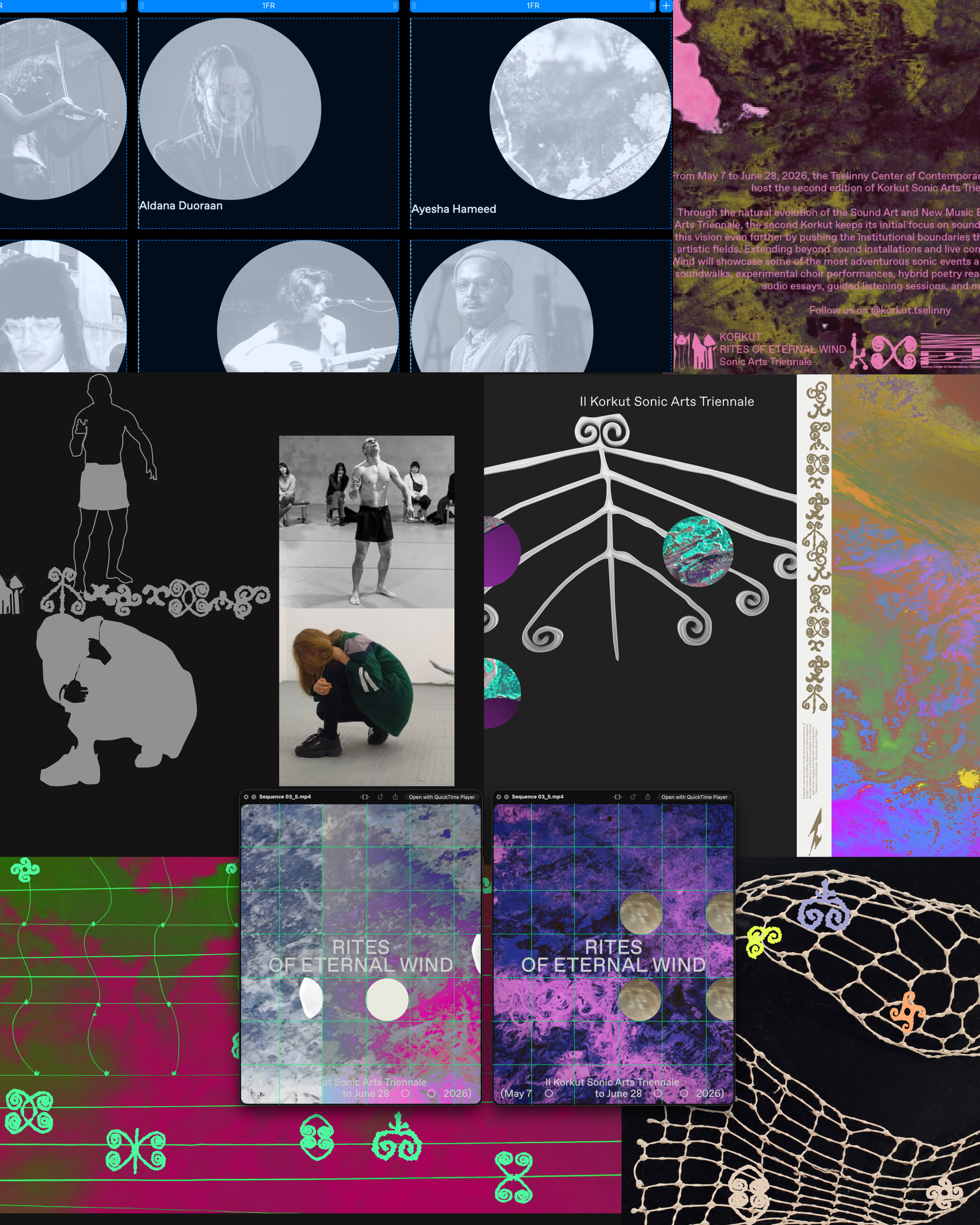
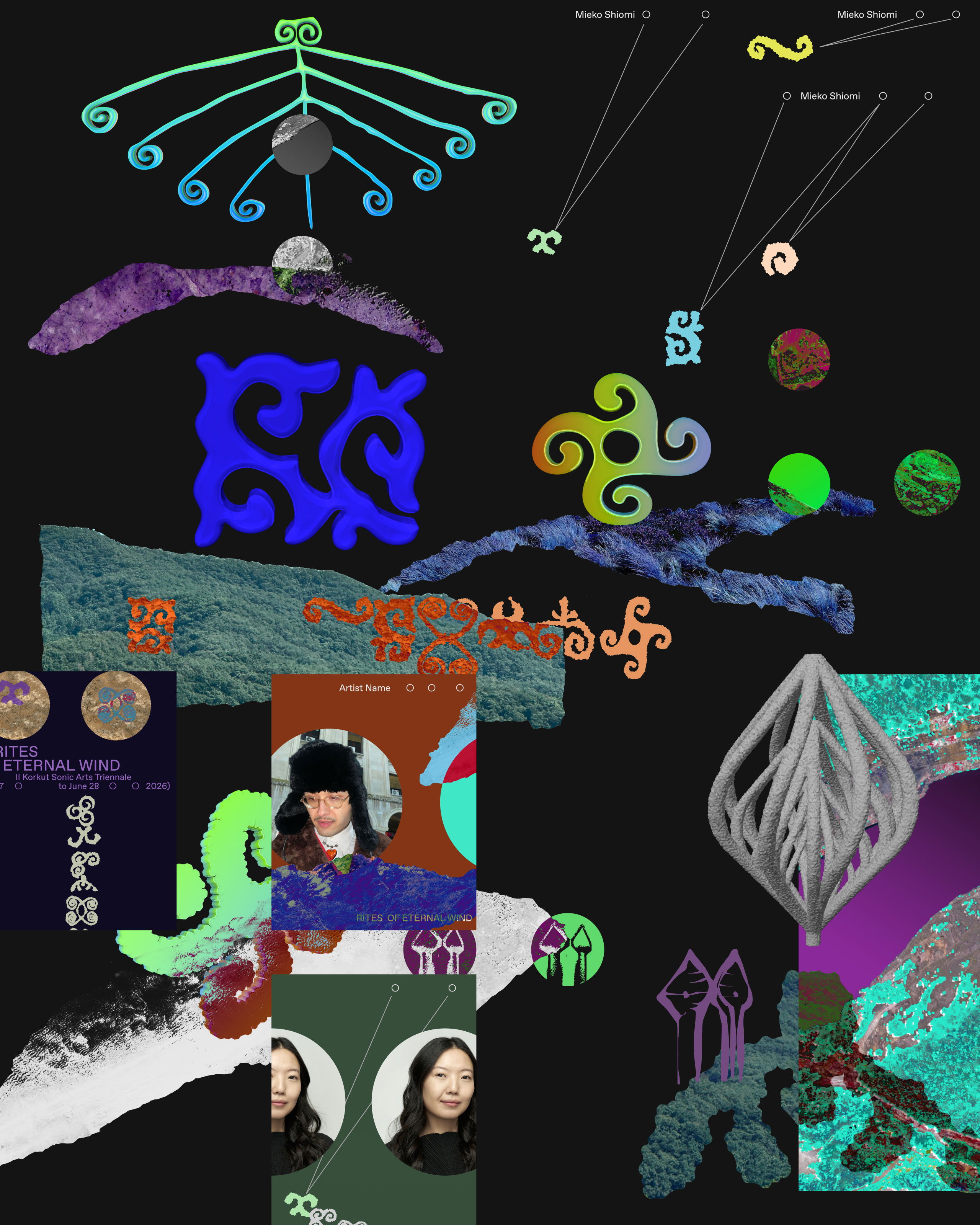
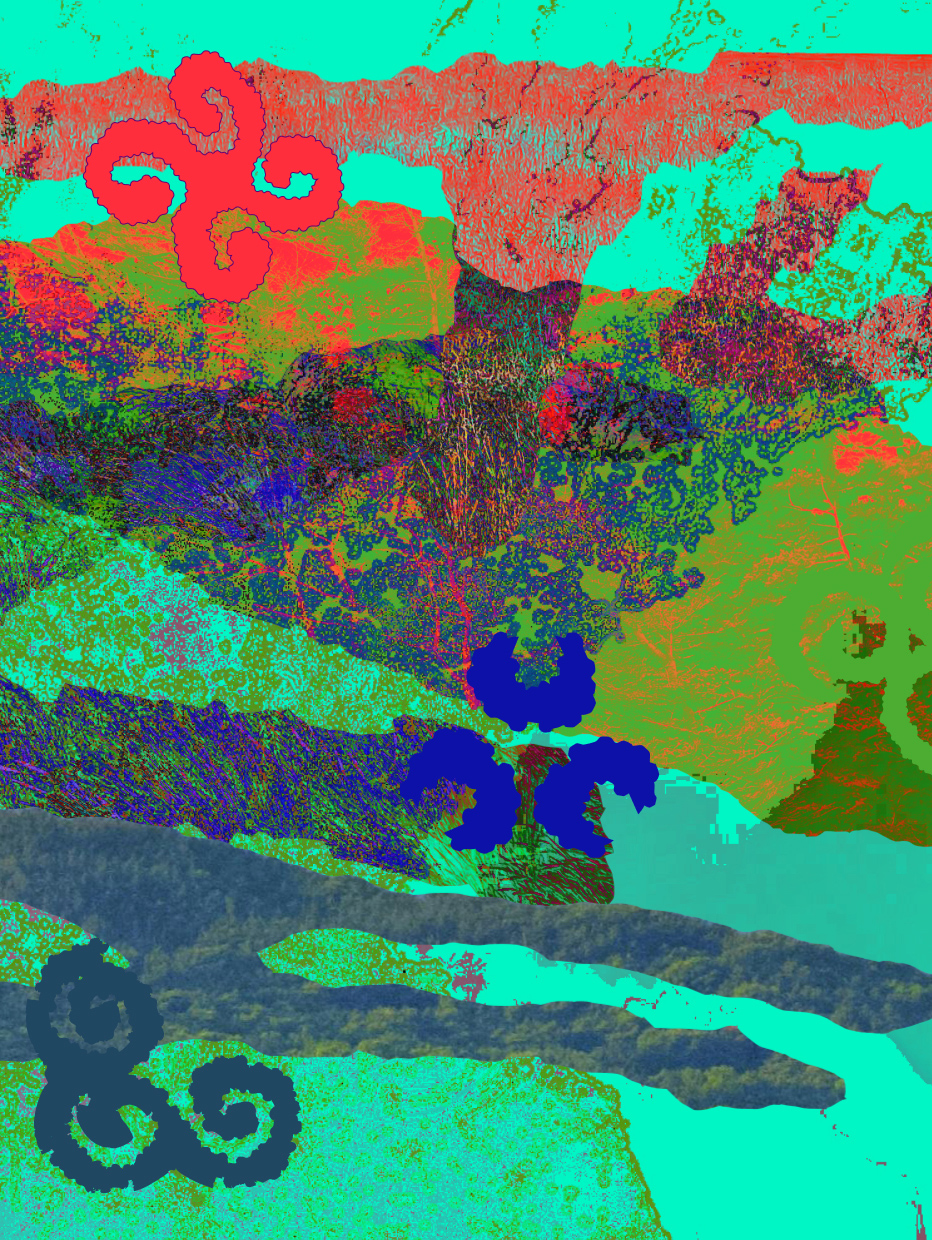
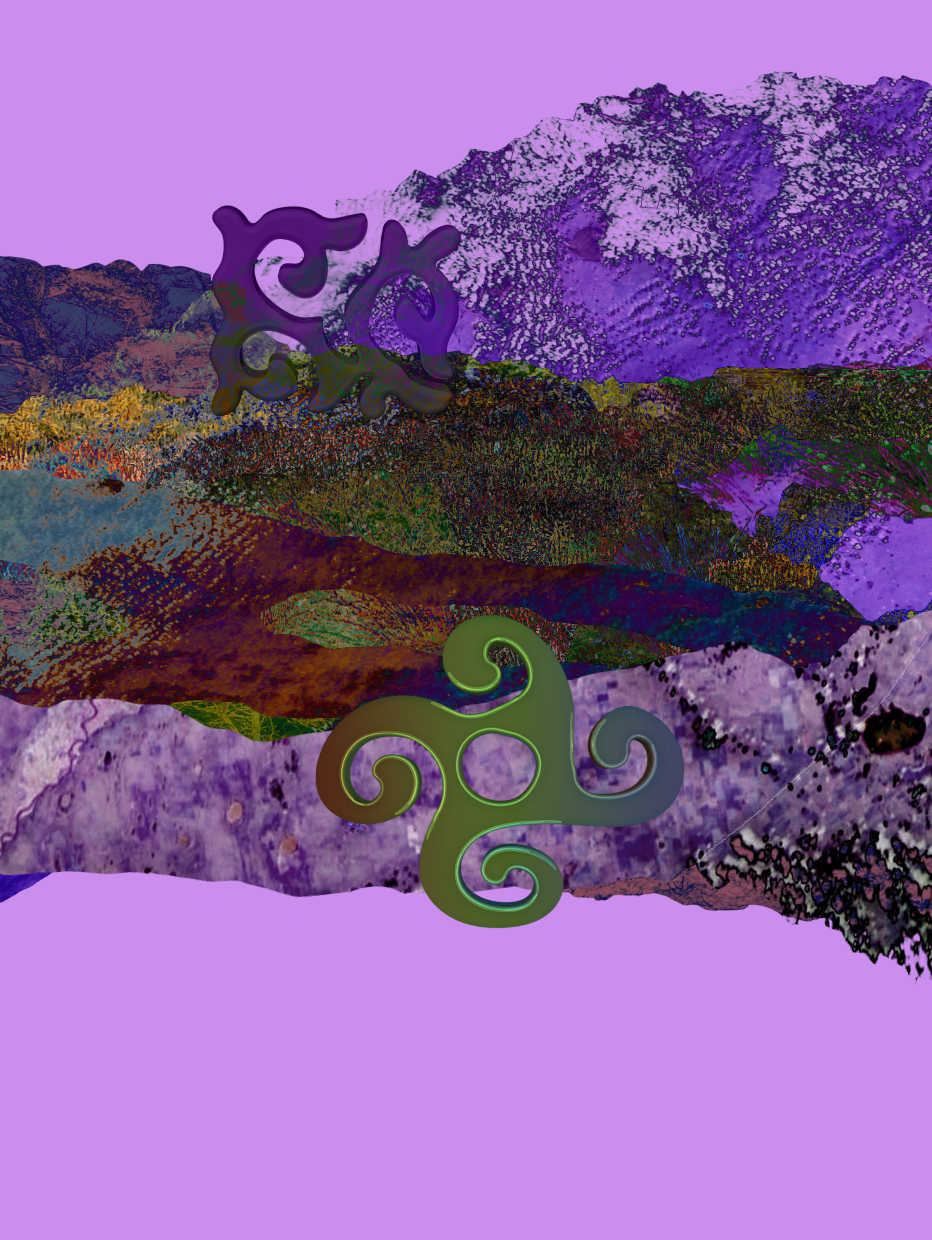
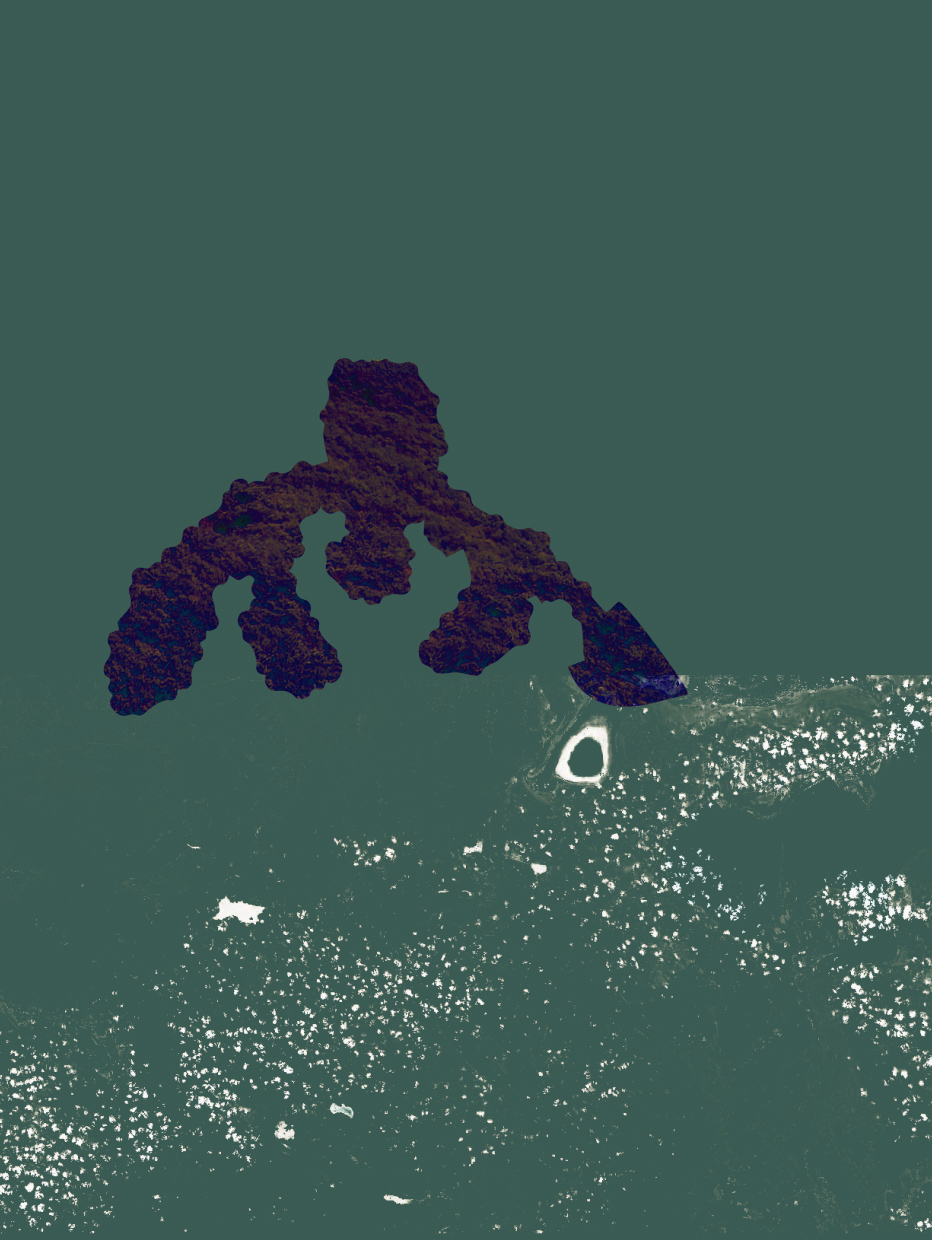
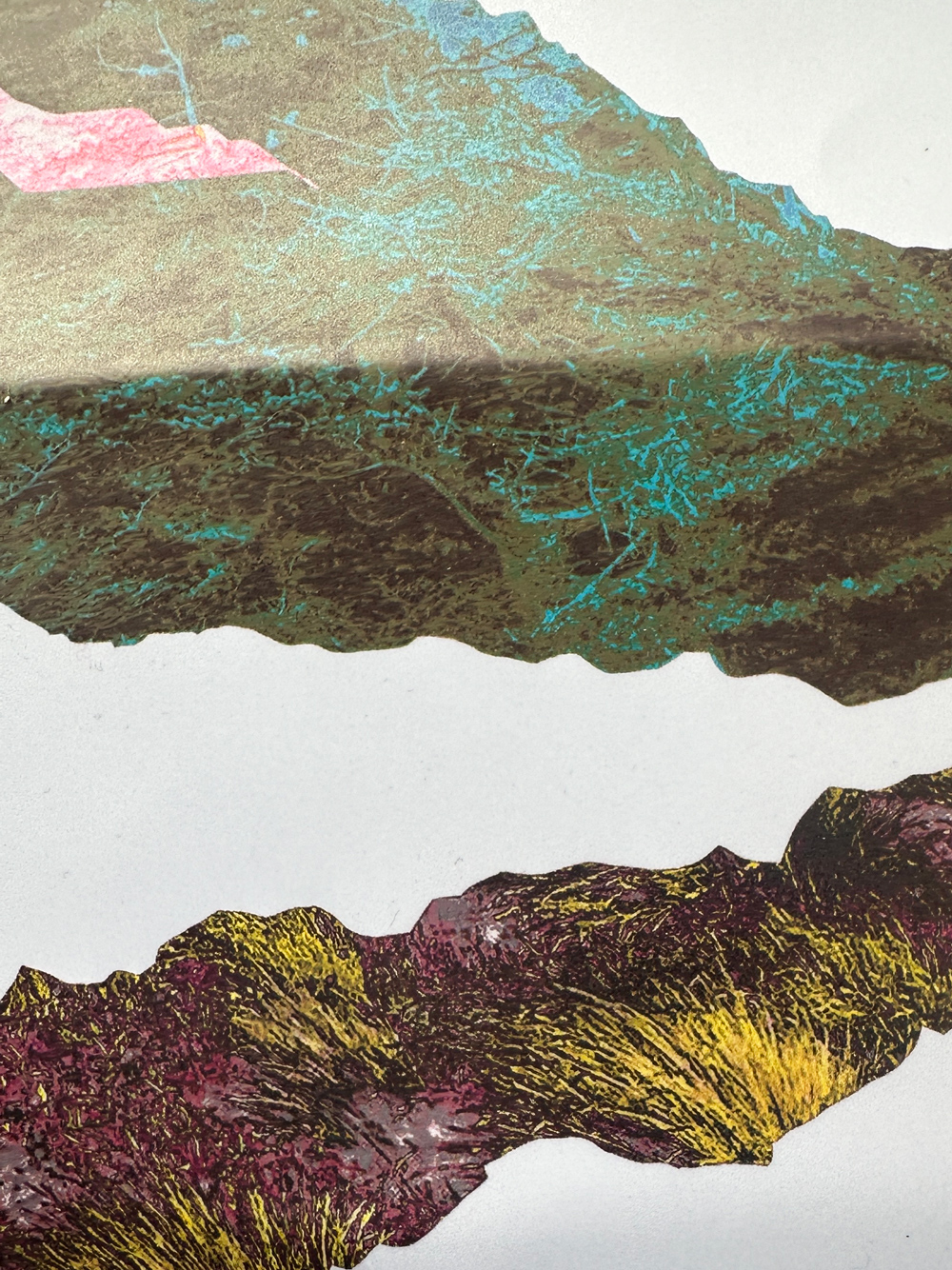
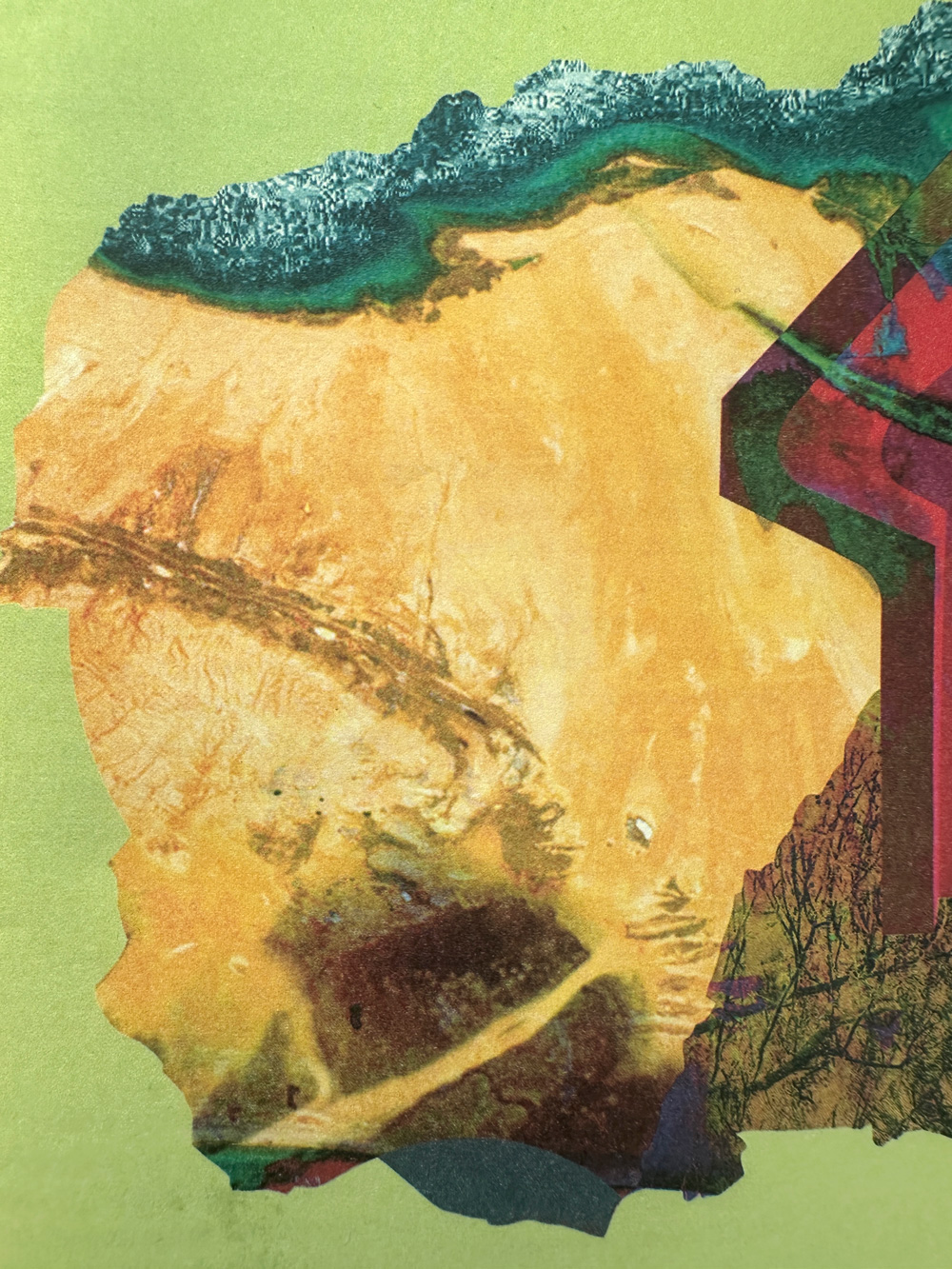
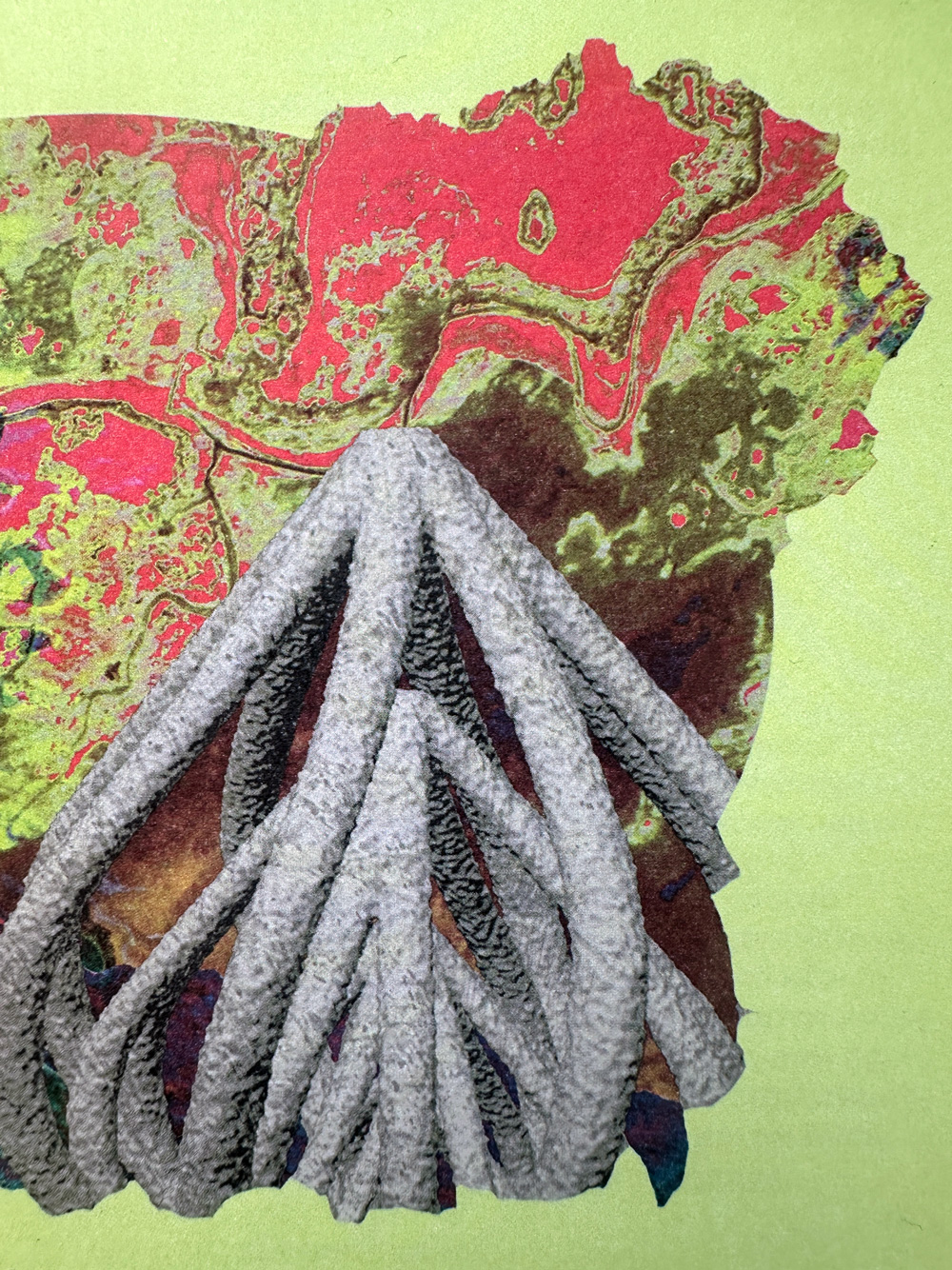
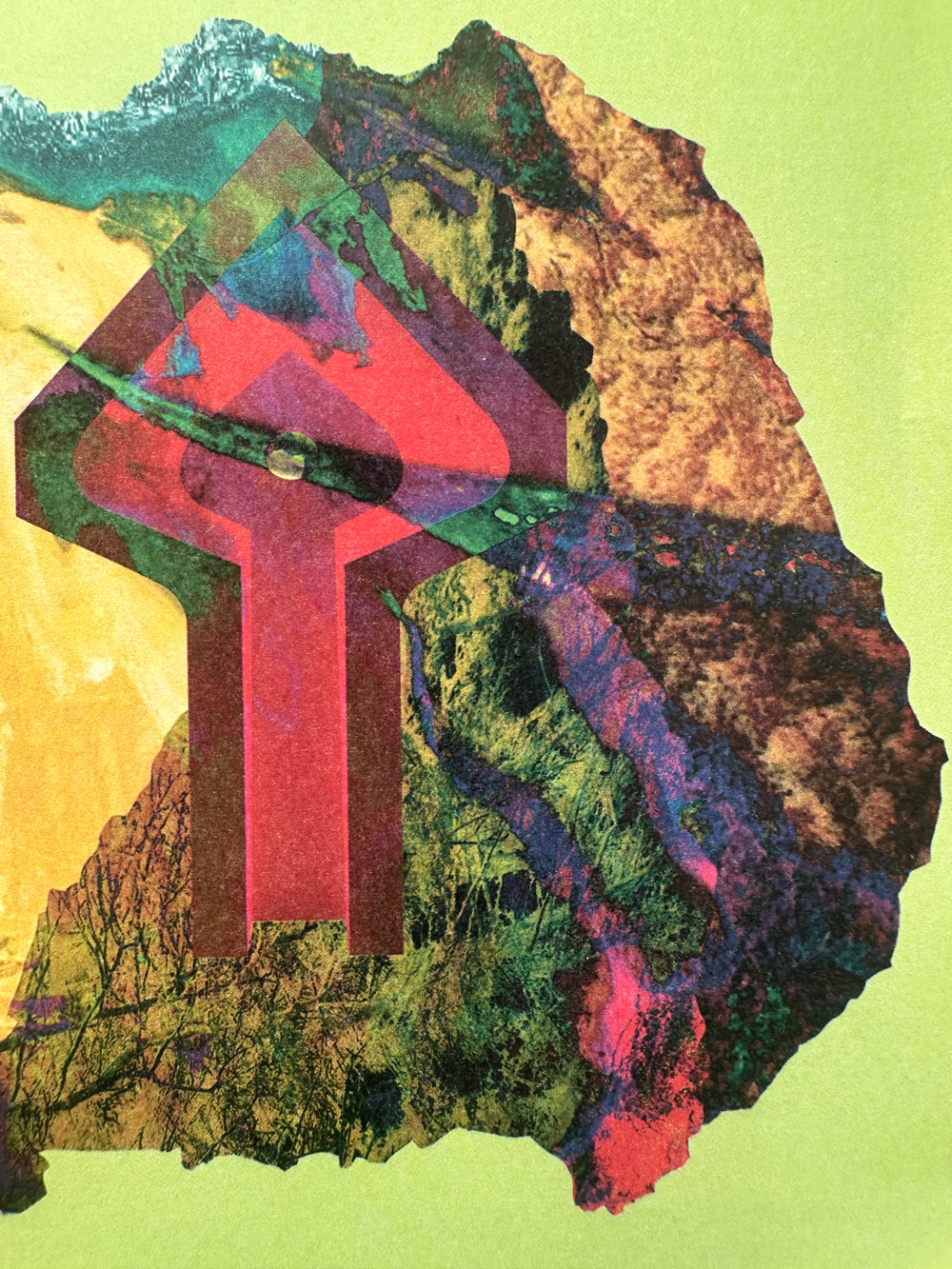
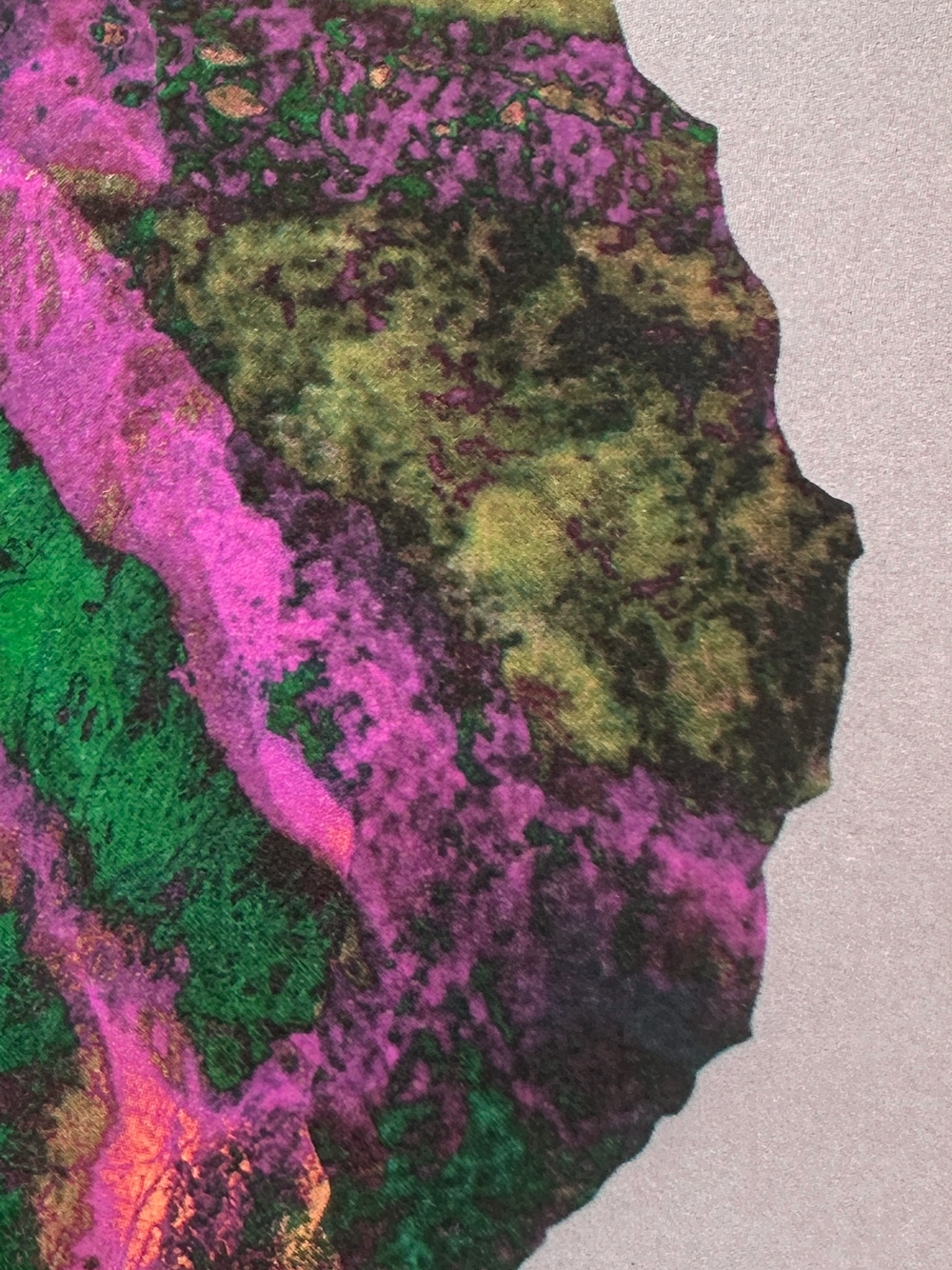
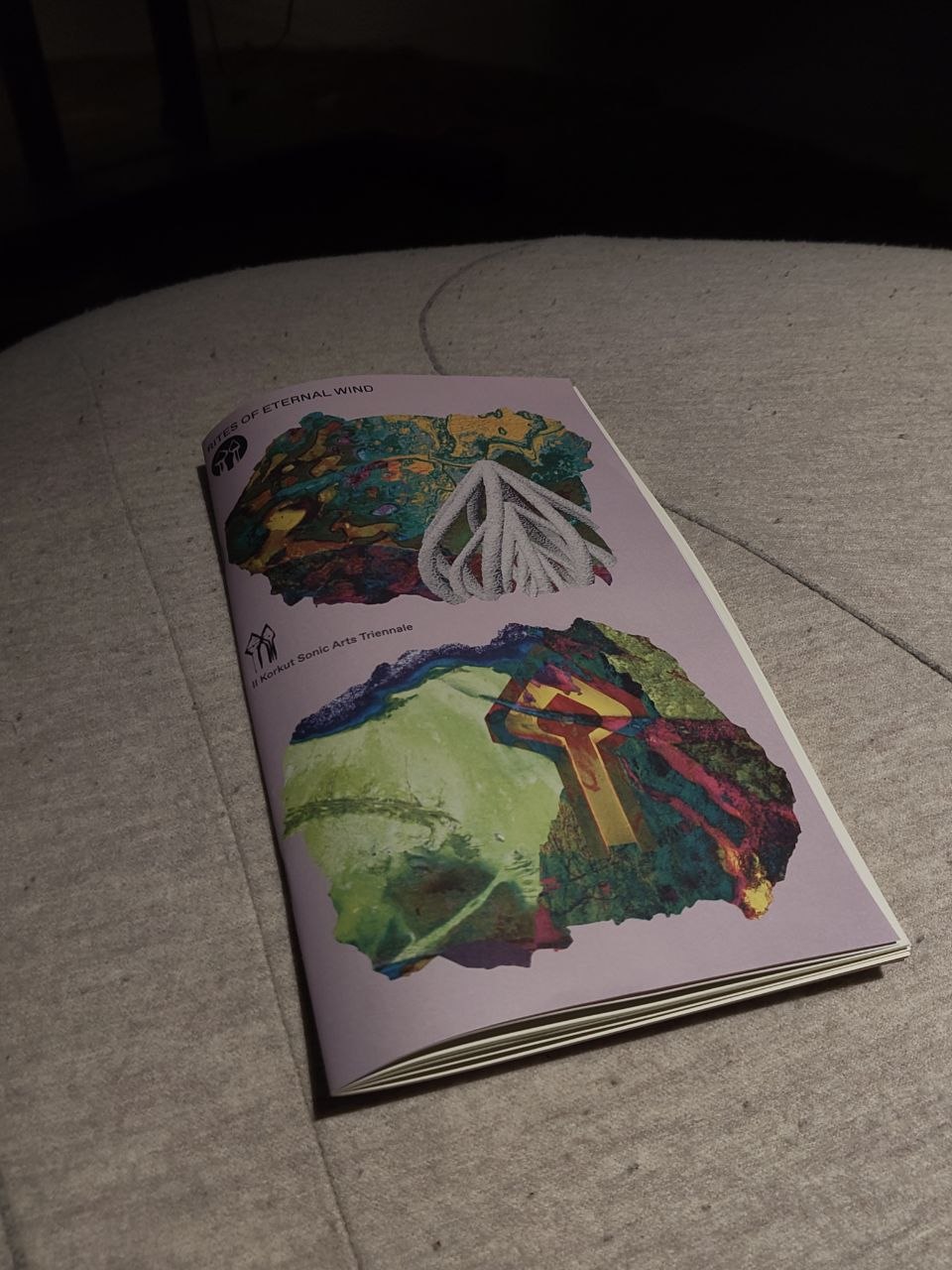
By visualizing the winds and land on this large, macro scale, the art direction bridges the physical geography of southern Kazakhstan with its spiritual interpretation. The satellite imagery becomes less about literal topography and more about mapping an invisible, living ecosystem where the natural and the supernatural are entirely indistinguishable from one another.
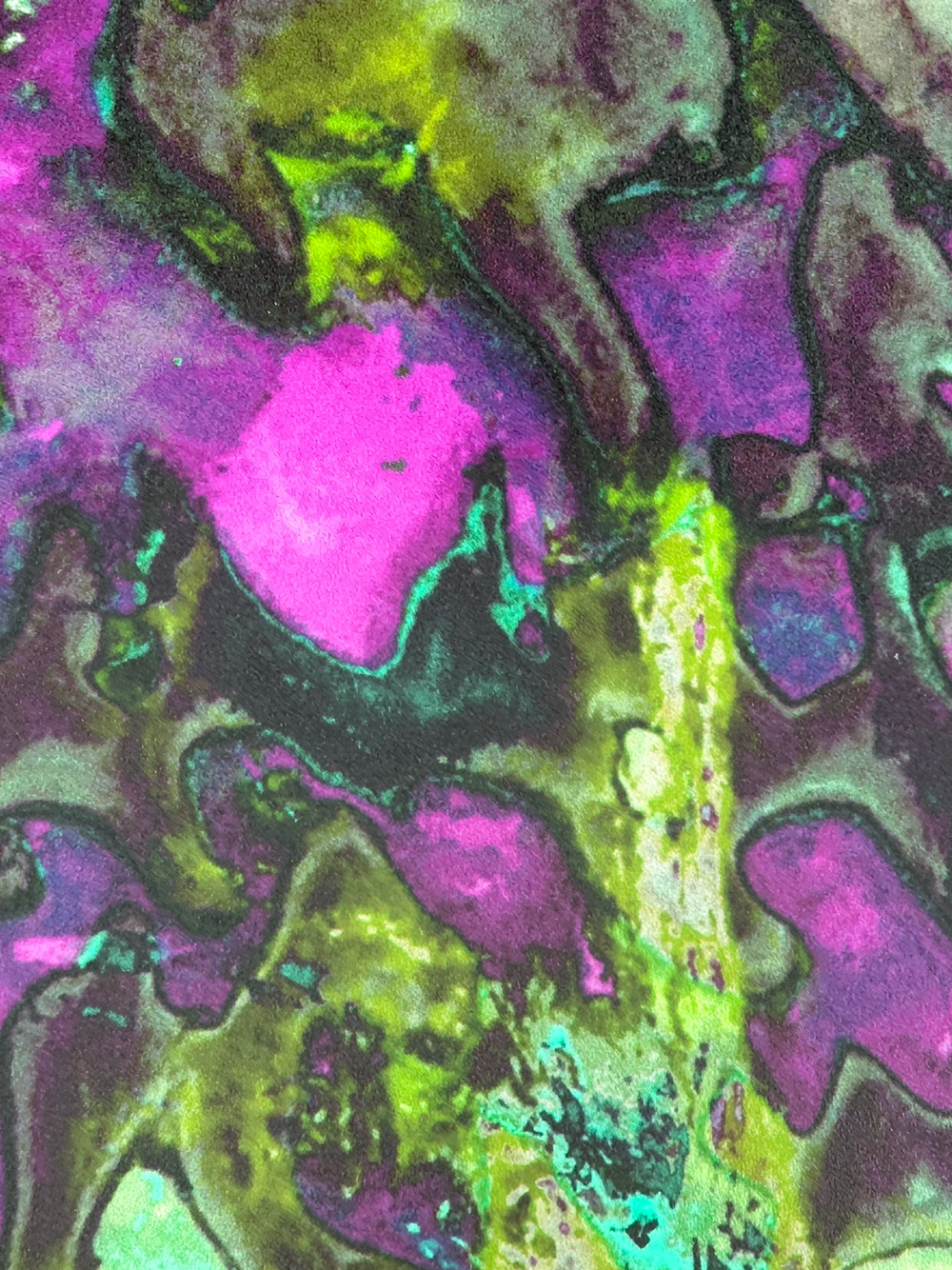
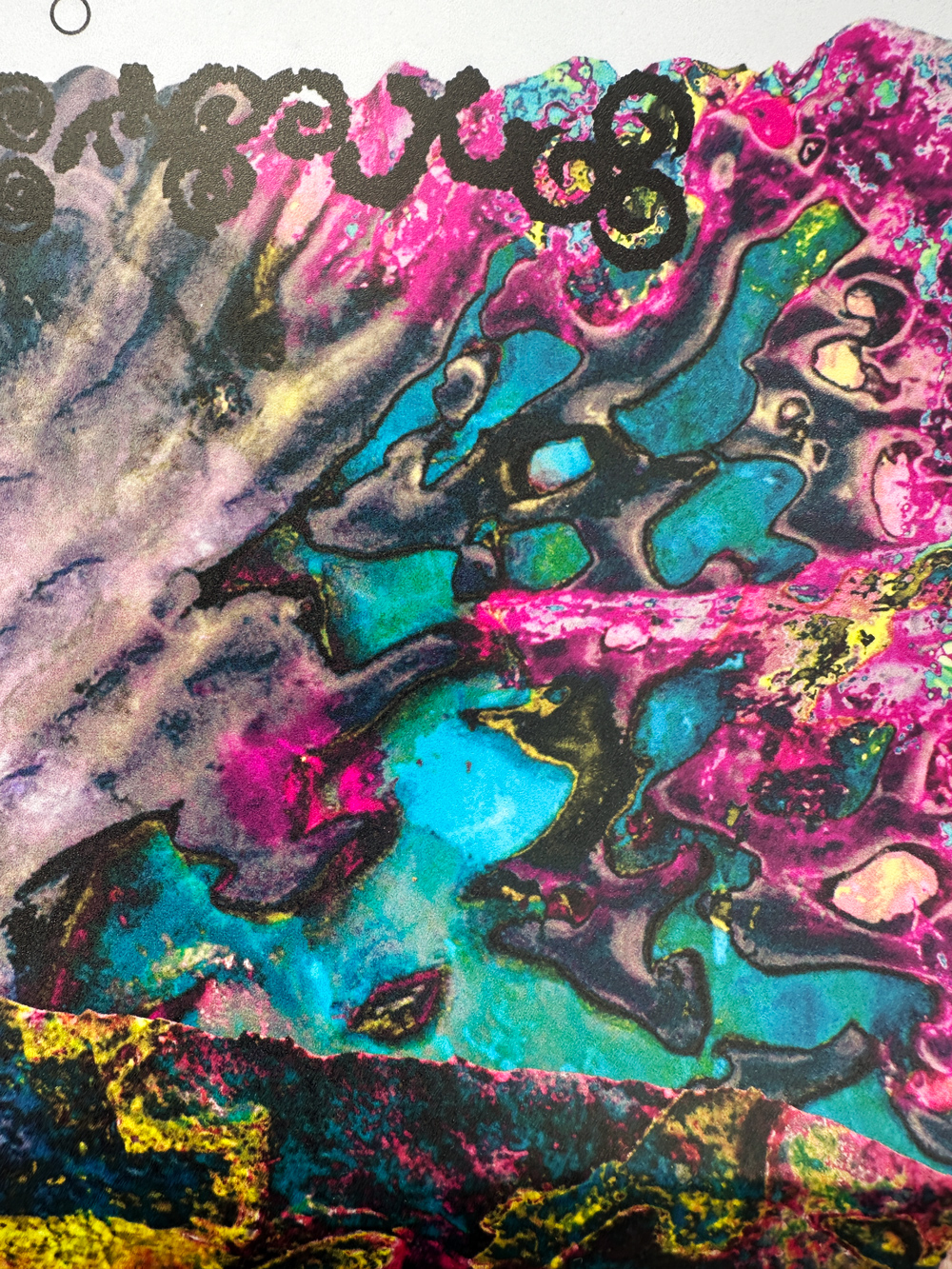
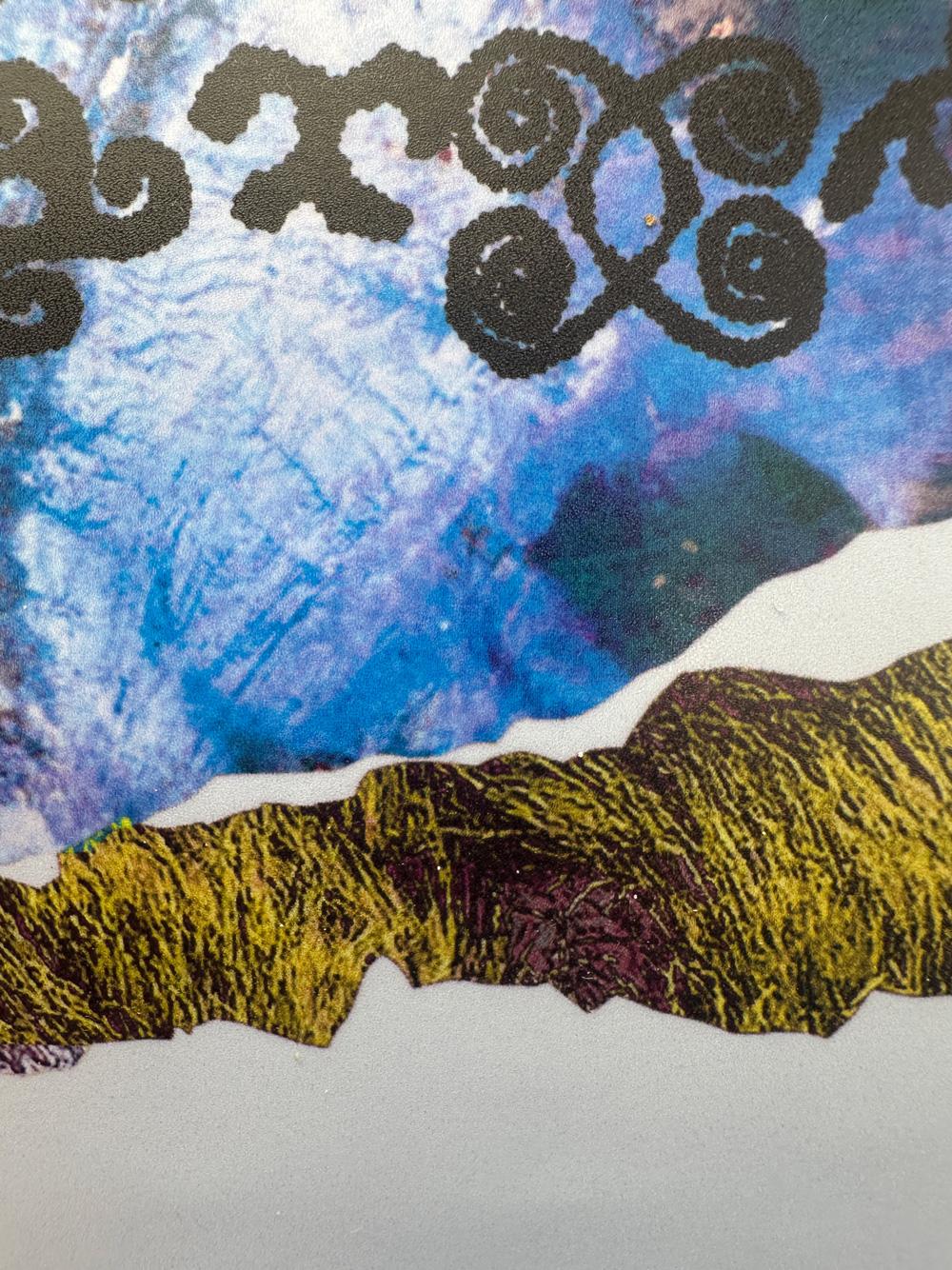
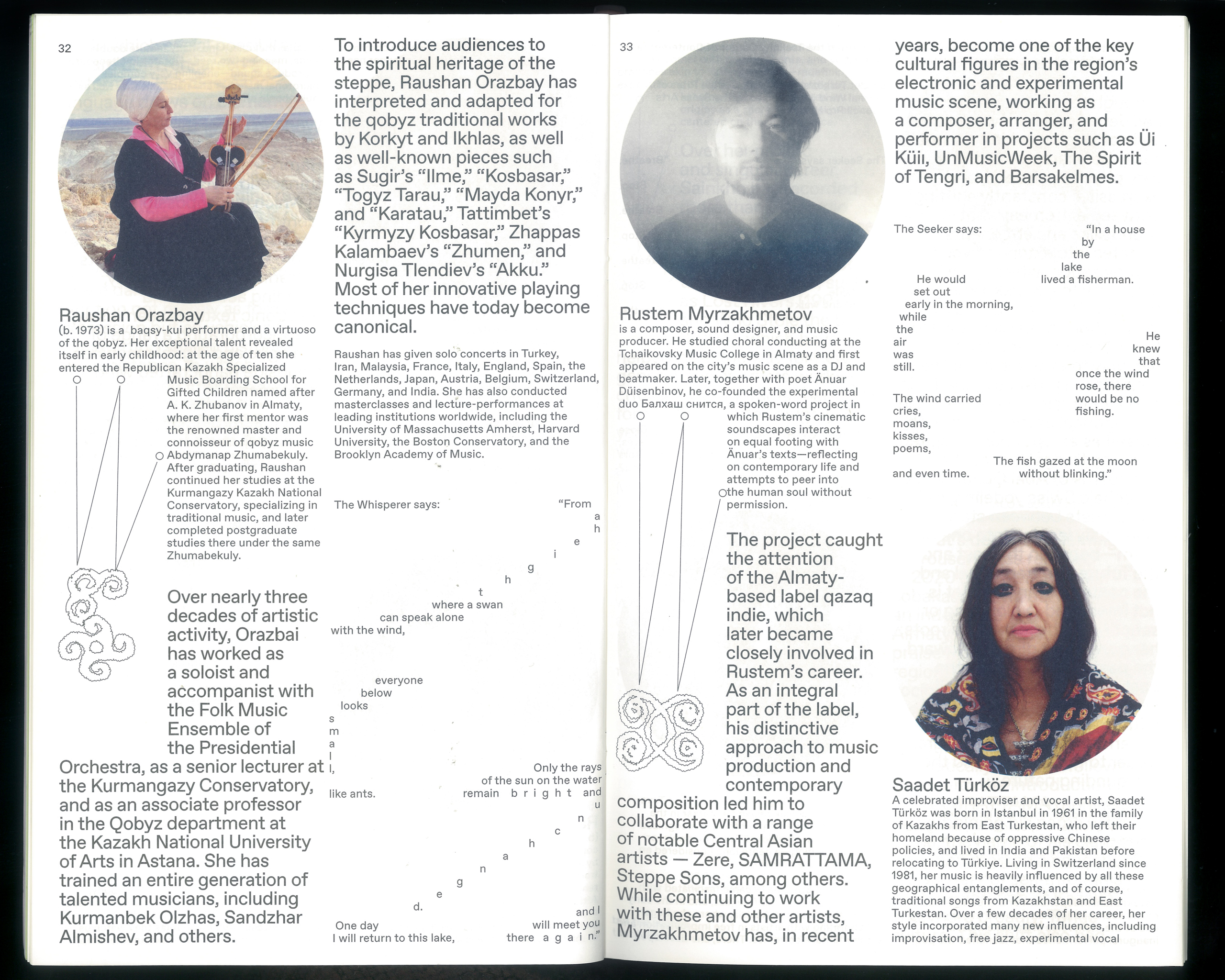
This specific color shift represents an astral plane constructed from folk ideas about a sentient natural world. Within this visual system, the land and winds are treated as conscious entities manifested as spirits. Ardak’s custom folk ornaments embody these spirits, sharing the exact same palette as the landscapes they inhabit to show they are fundamentally made of the same elemental stuff.
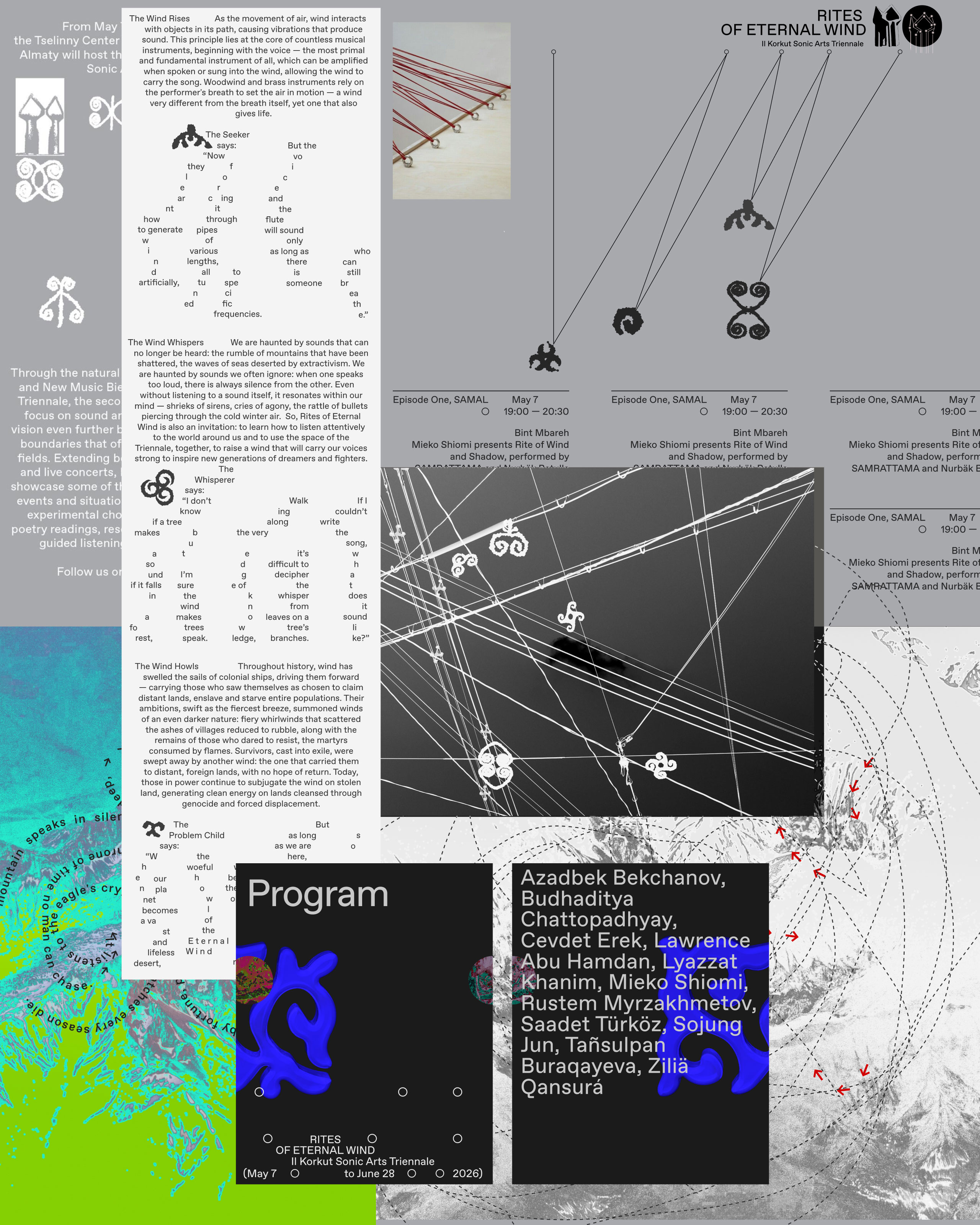
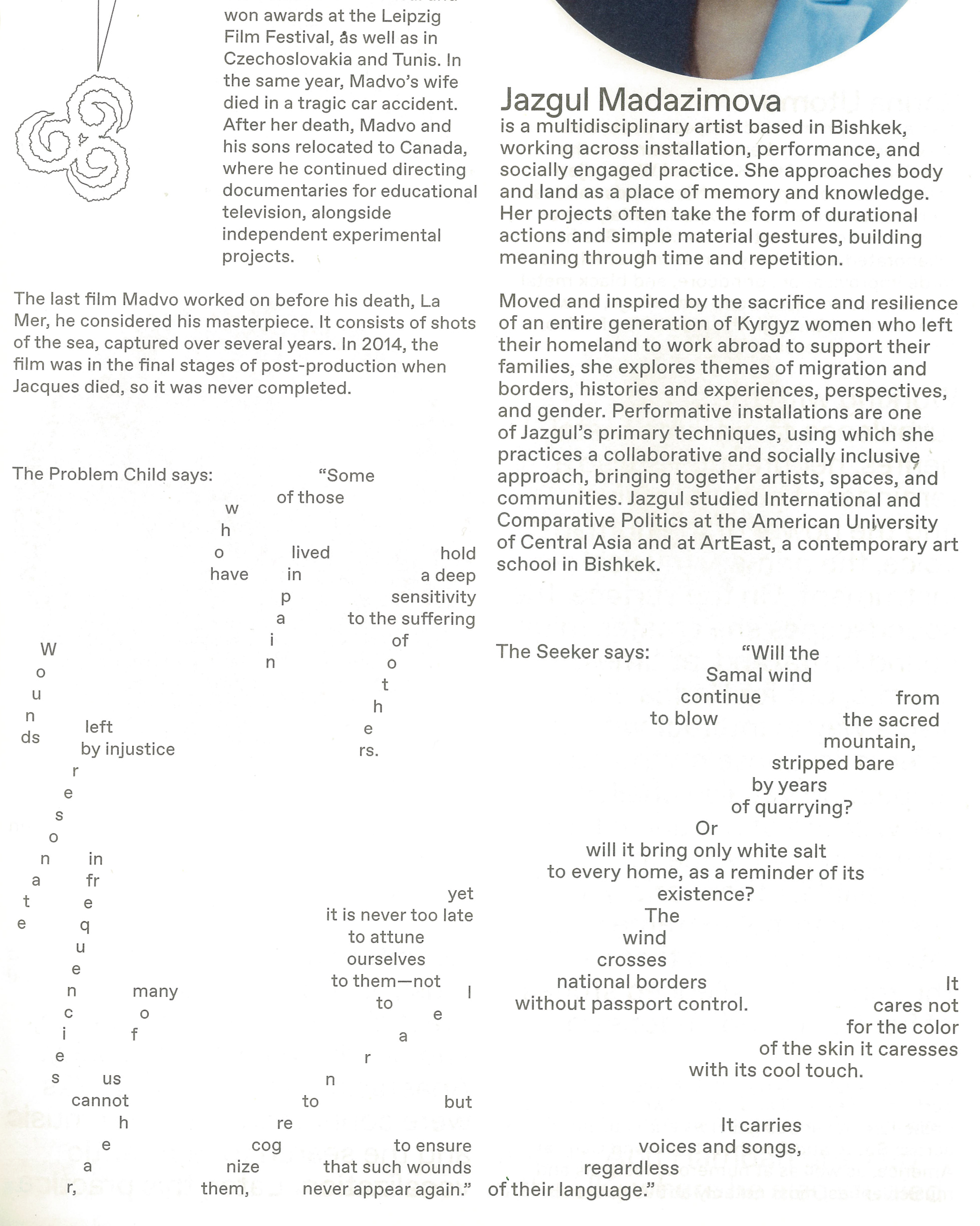
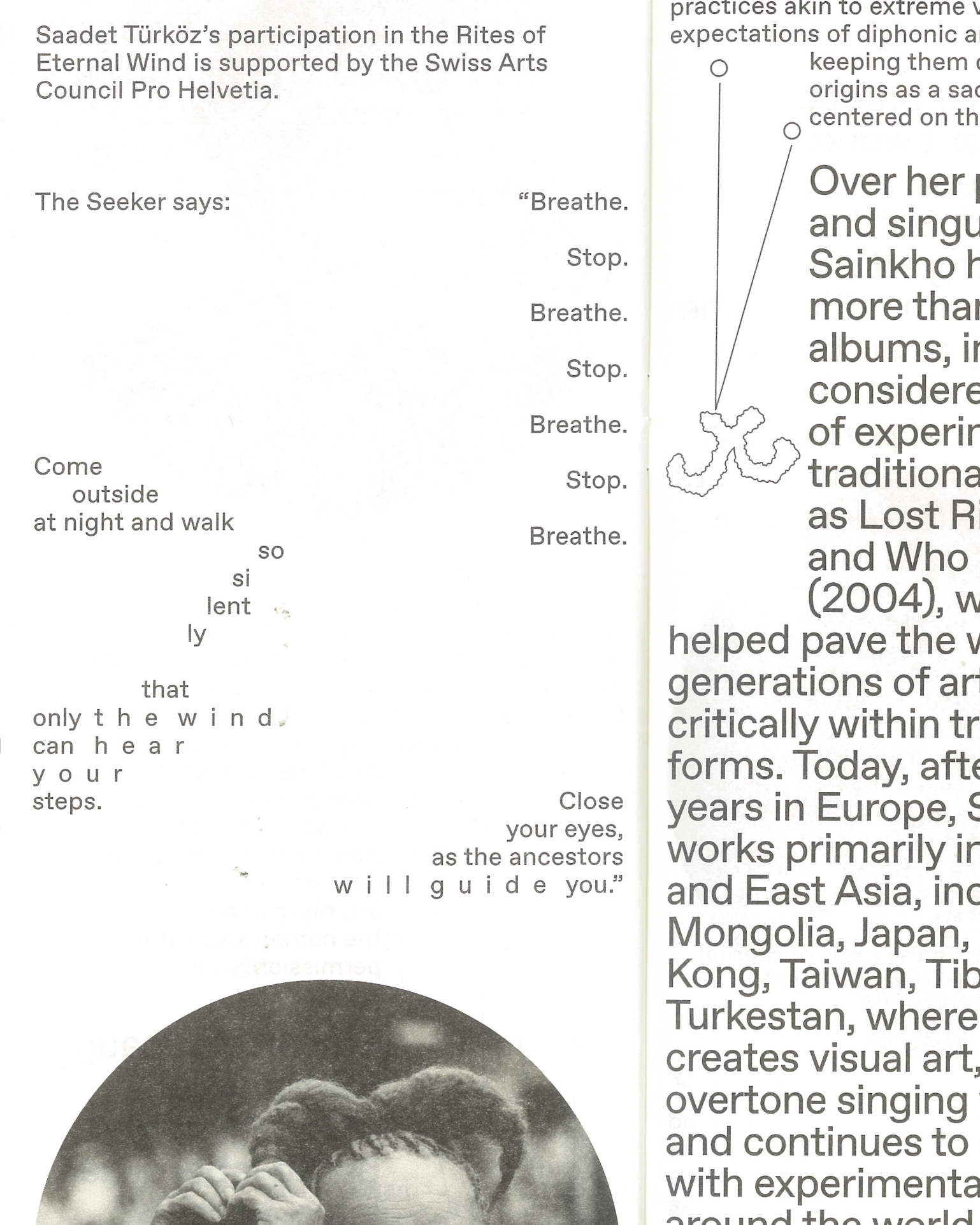
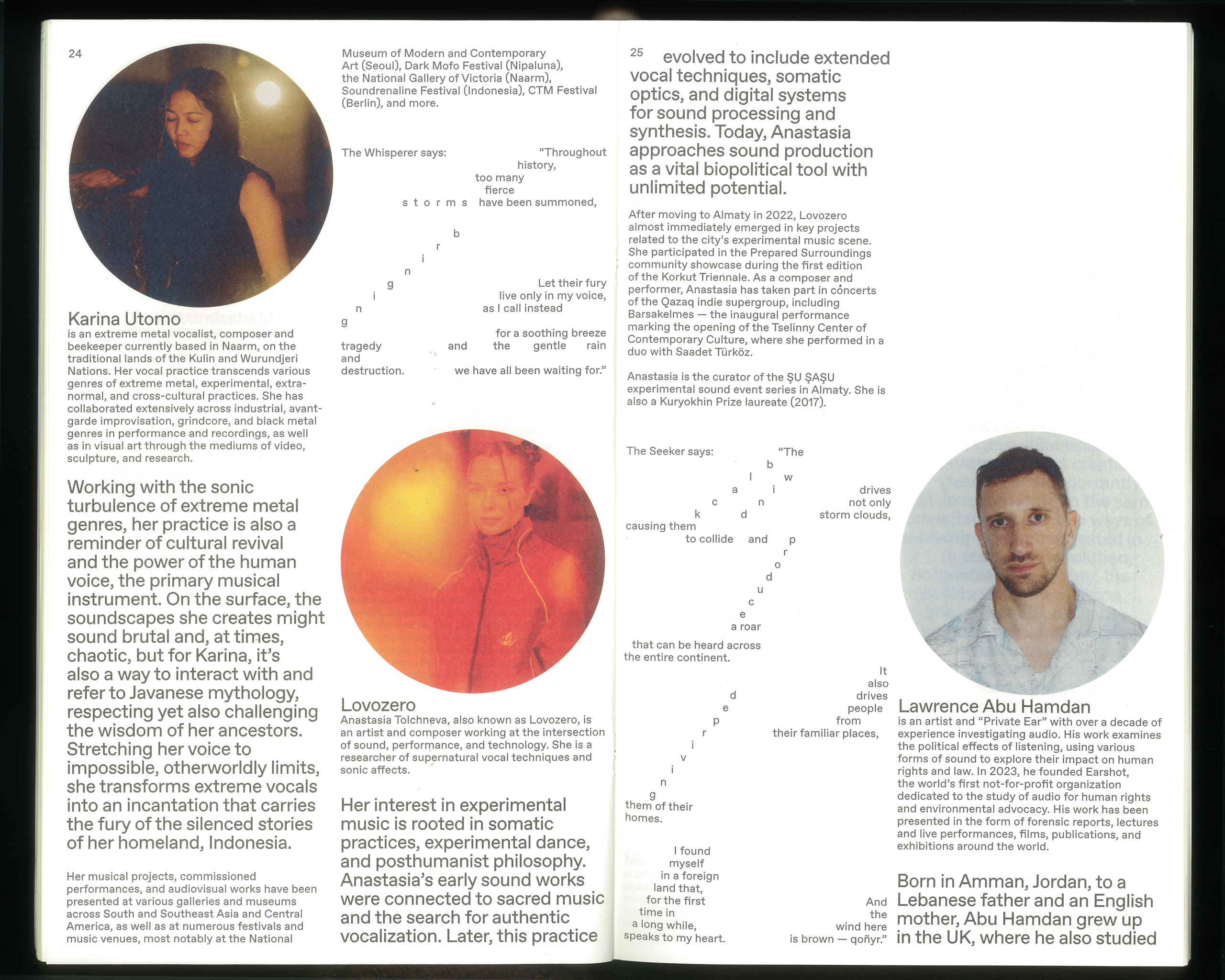
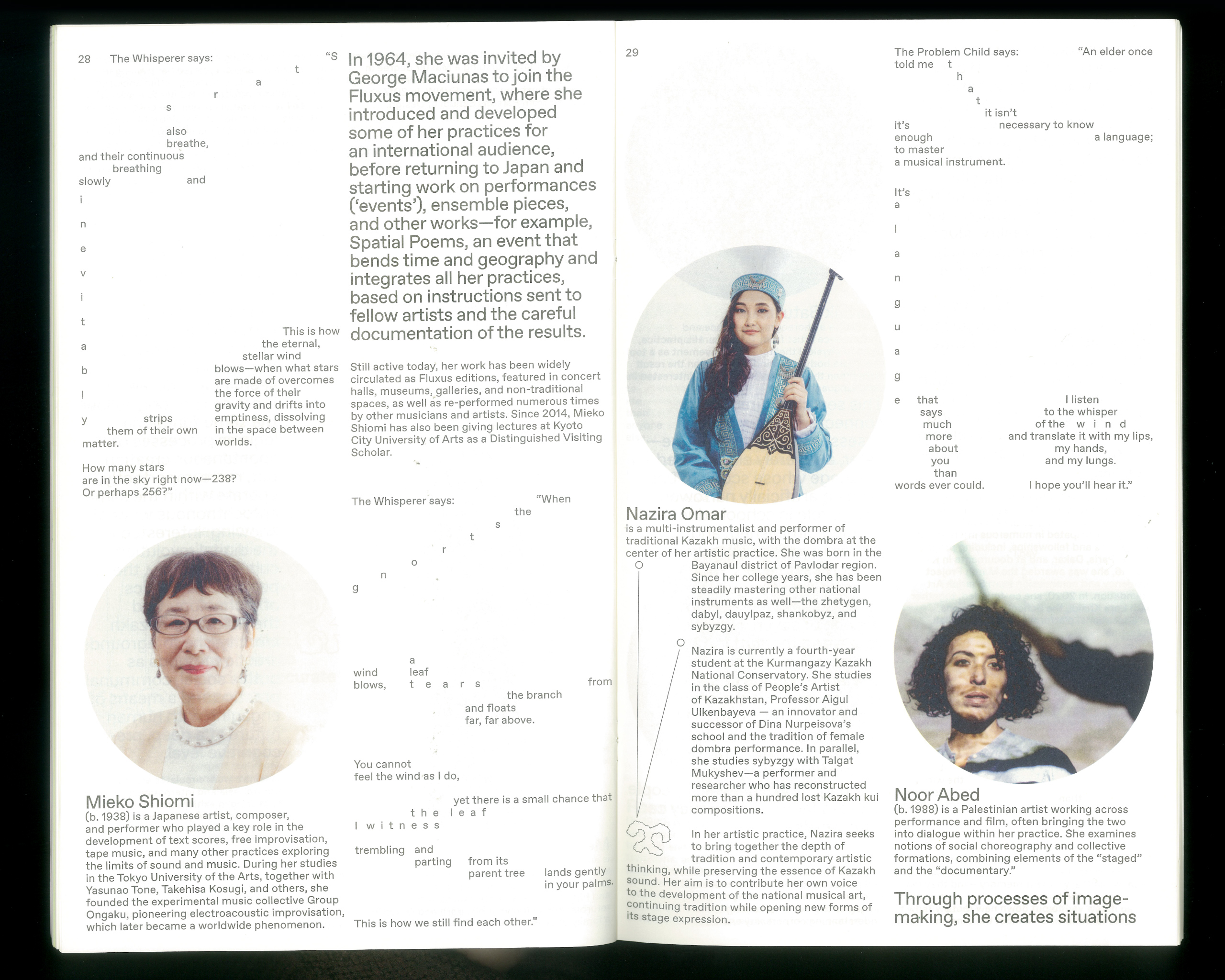
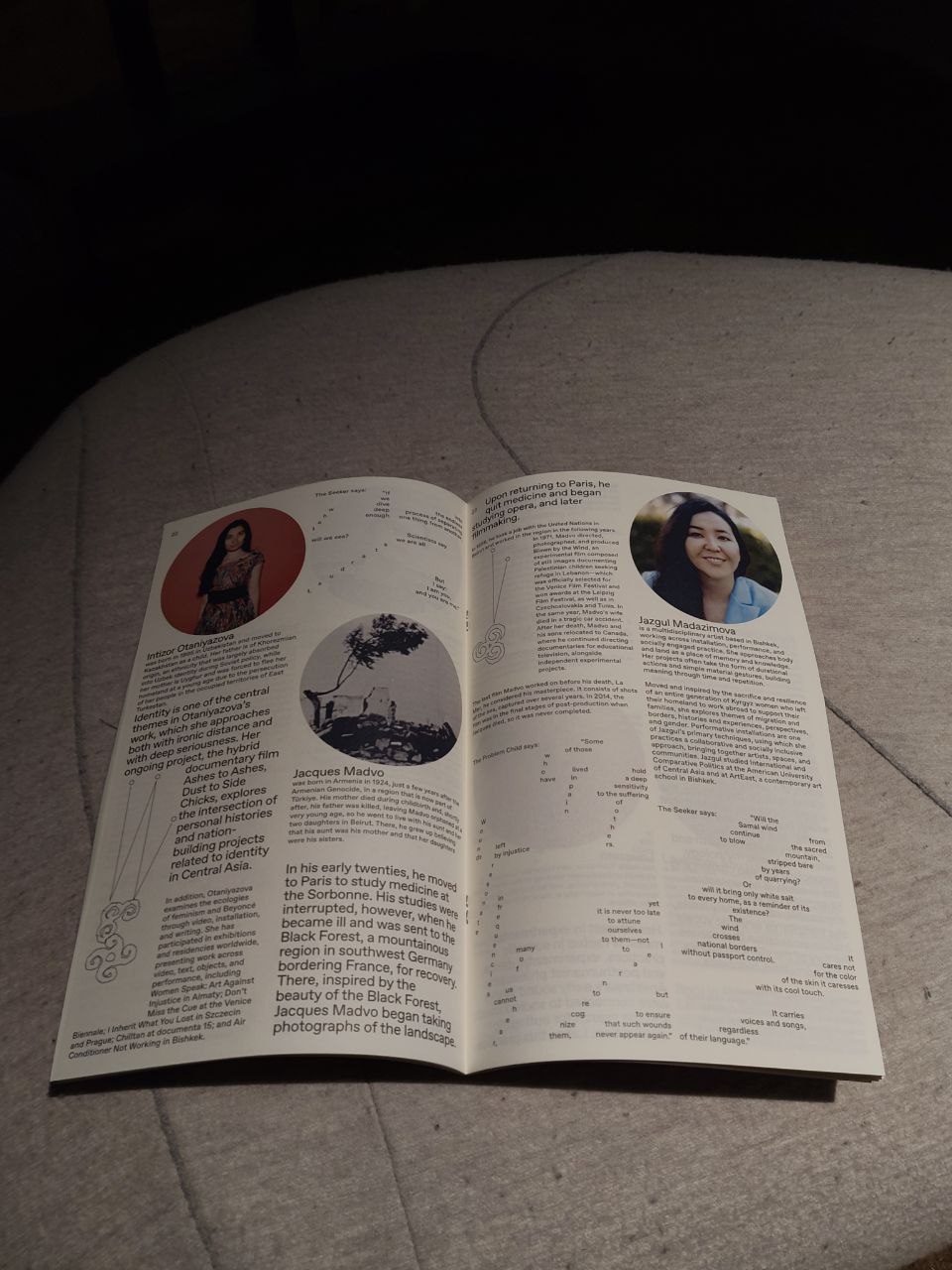
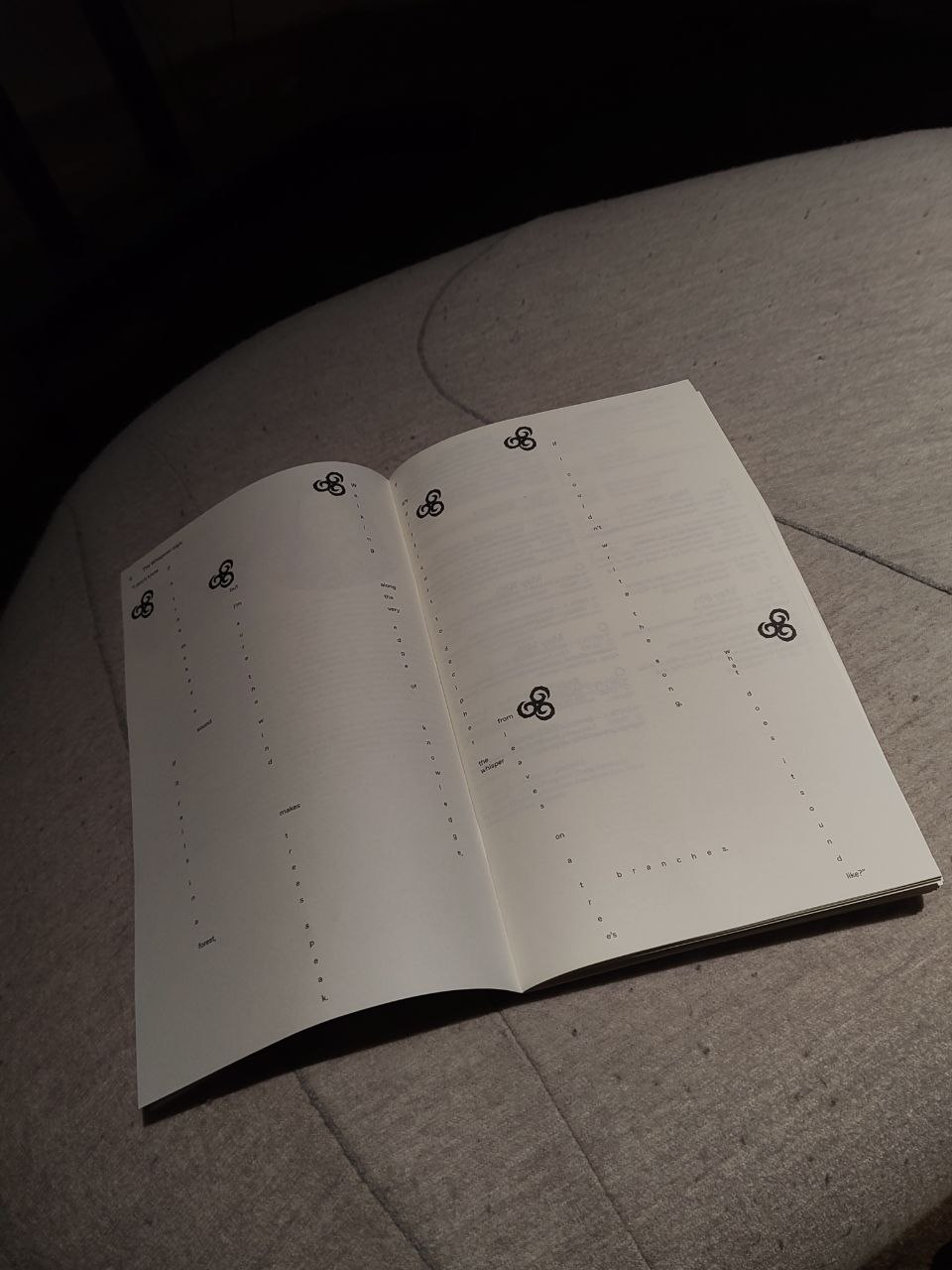
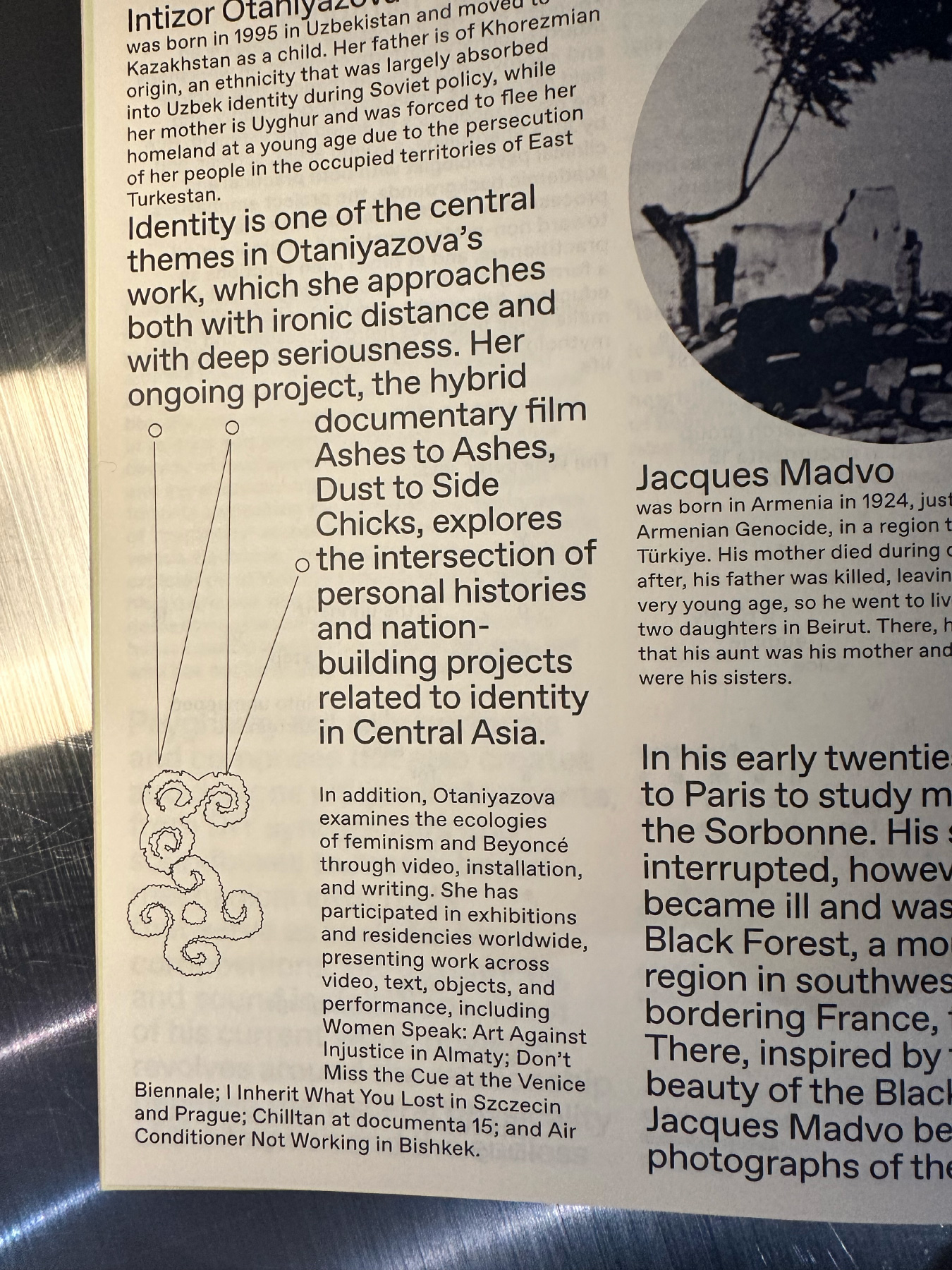
Poetry connects massive ideas to small, everyday details. I attempted to express this via graphics by showing how wind moves and drags objects dangling on threads, like leaves caught in a spiderweb or trinkets hanging from branches.
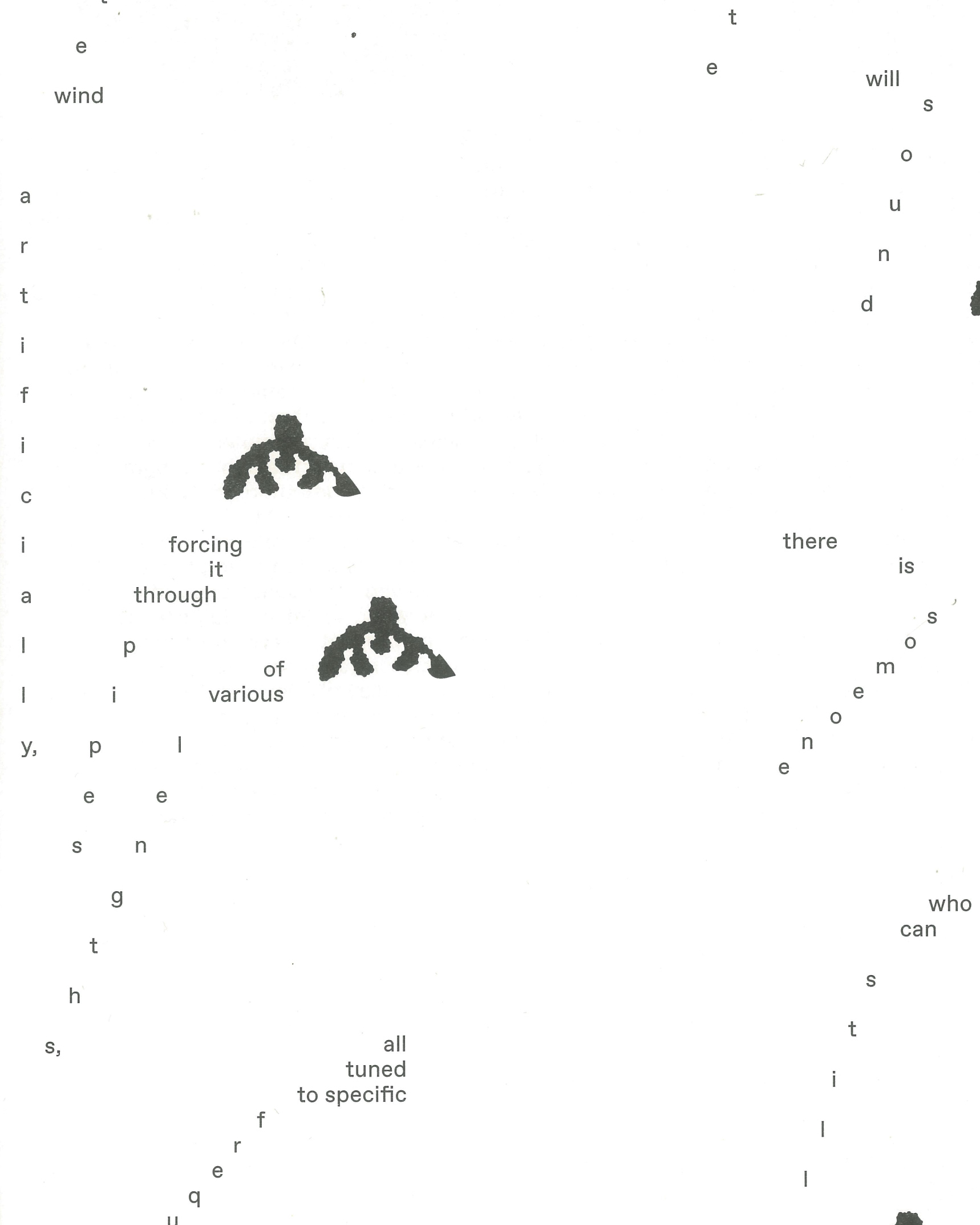
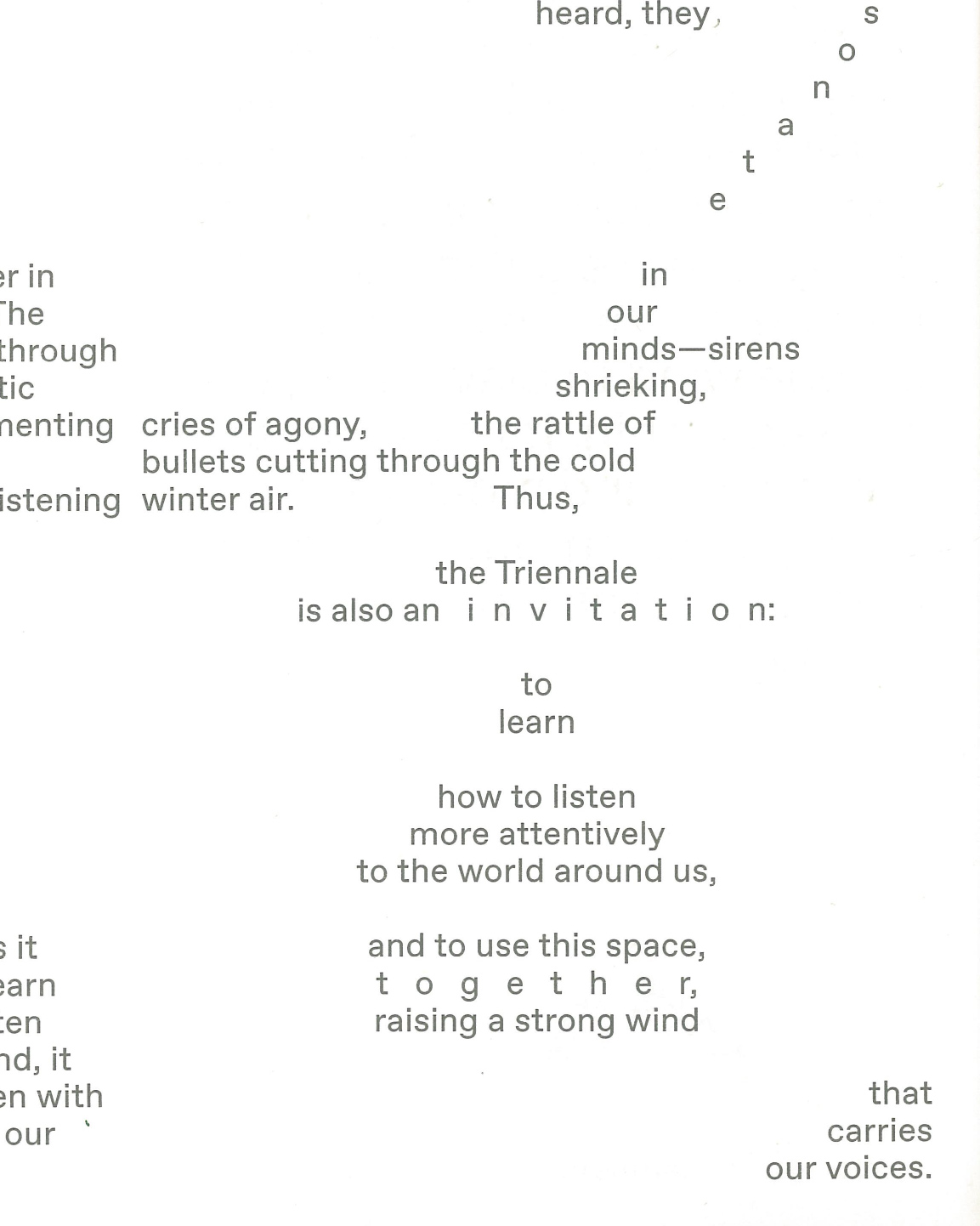
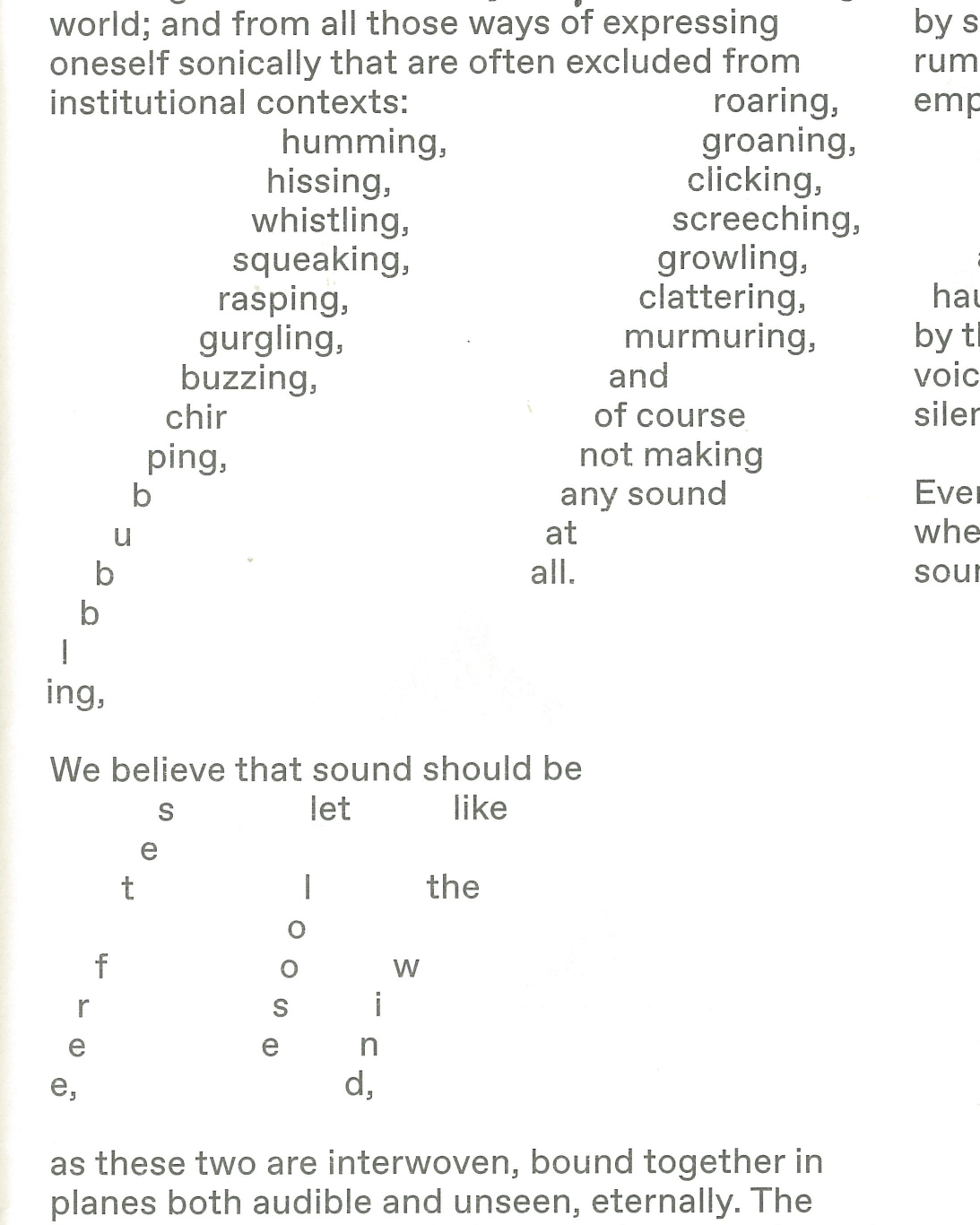
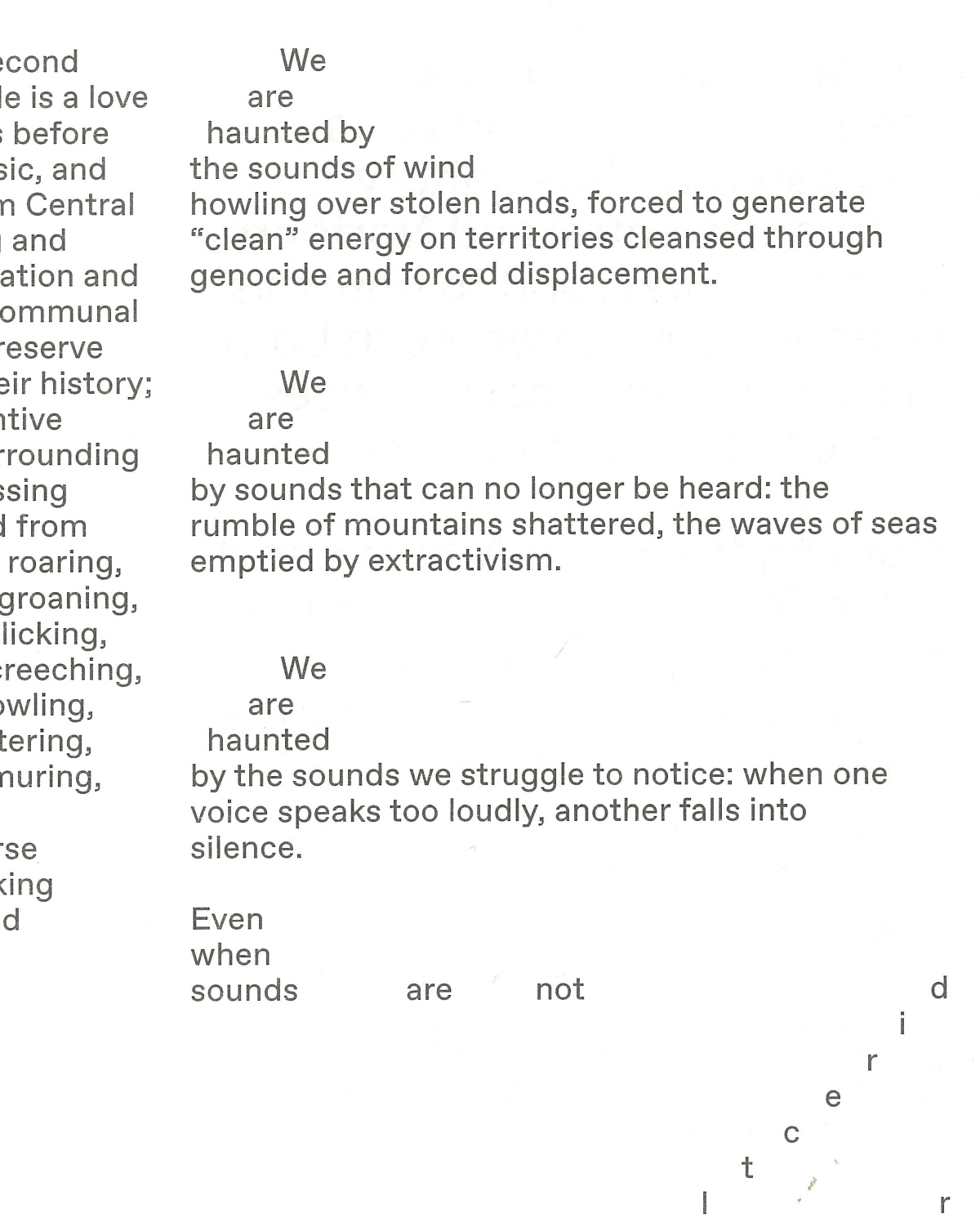
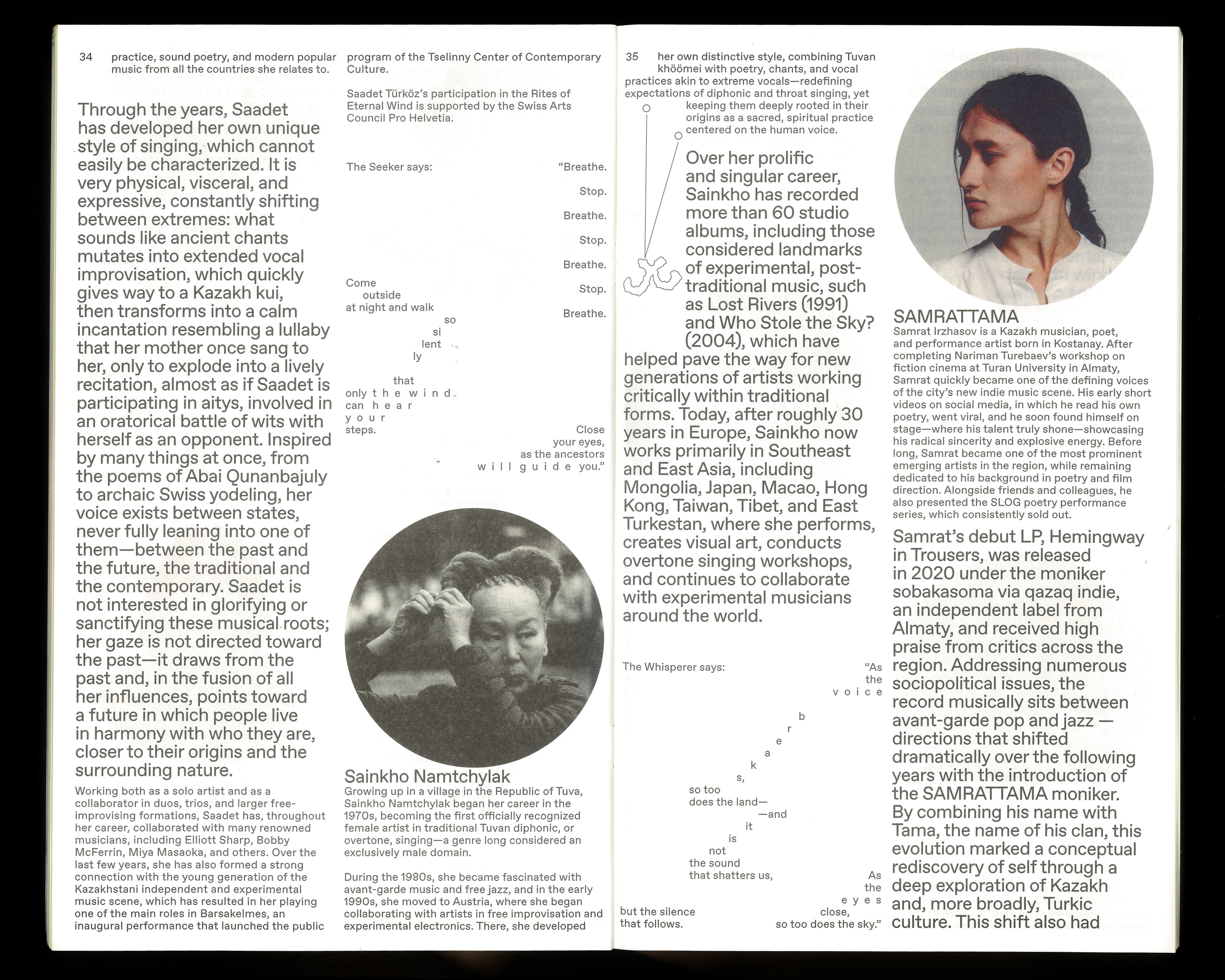
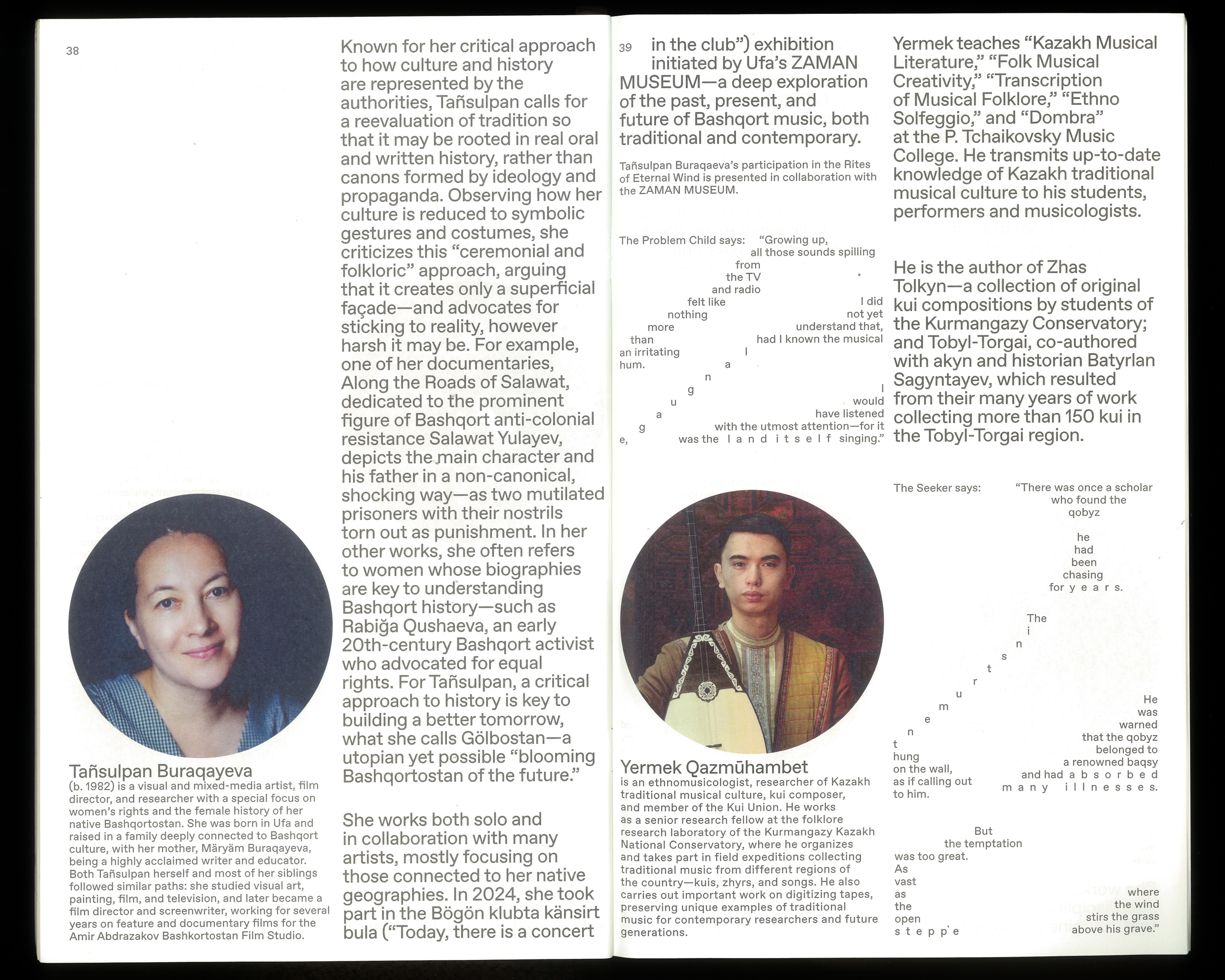
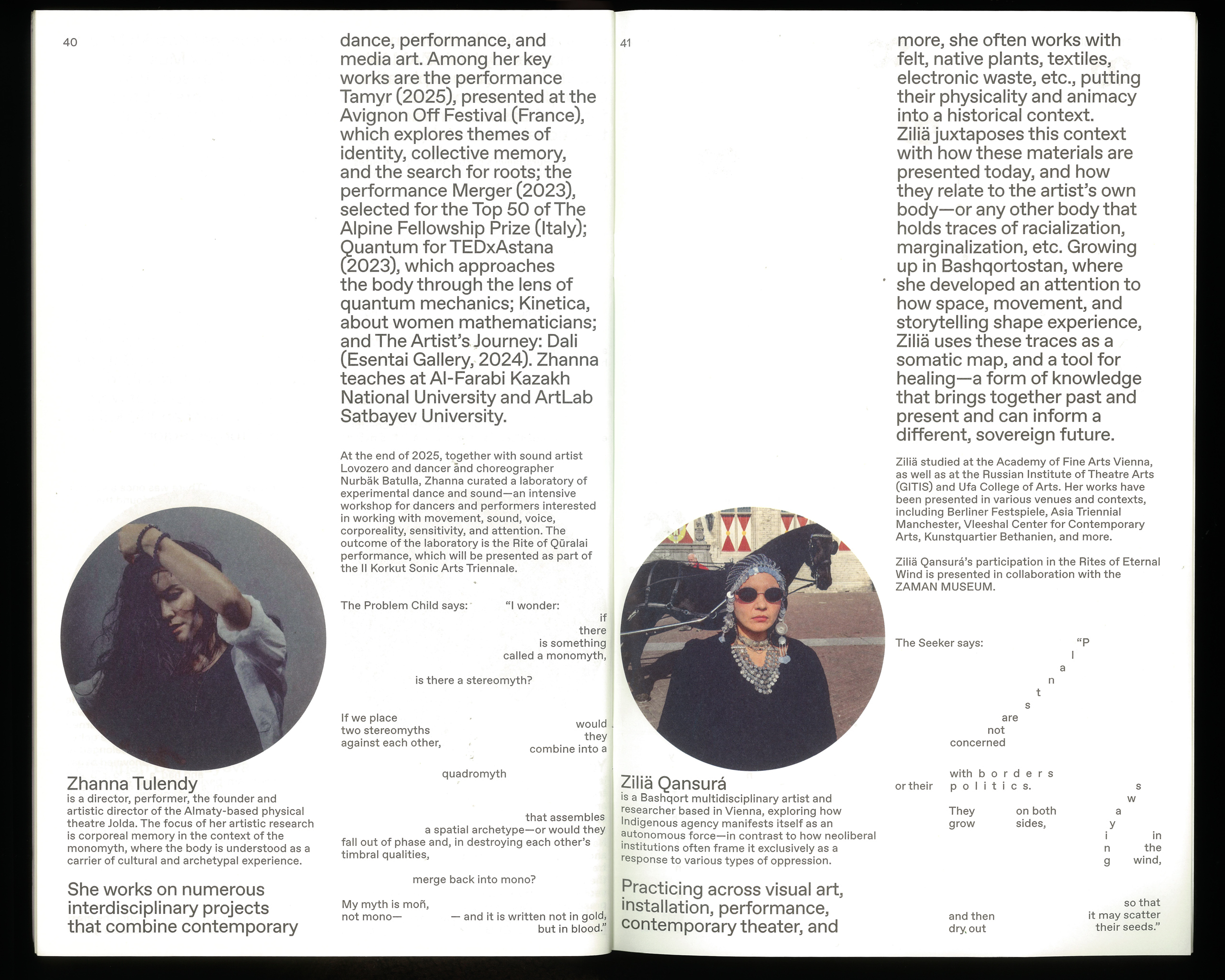
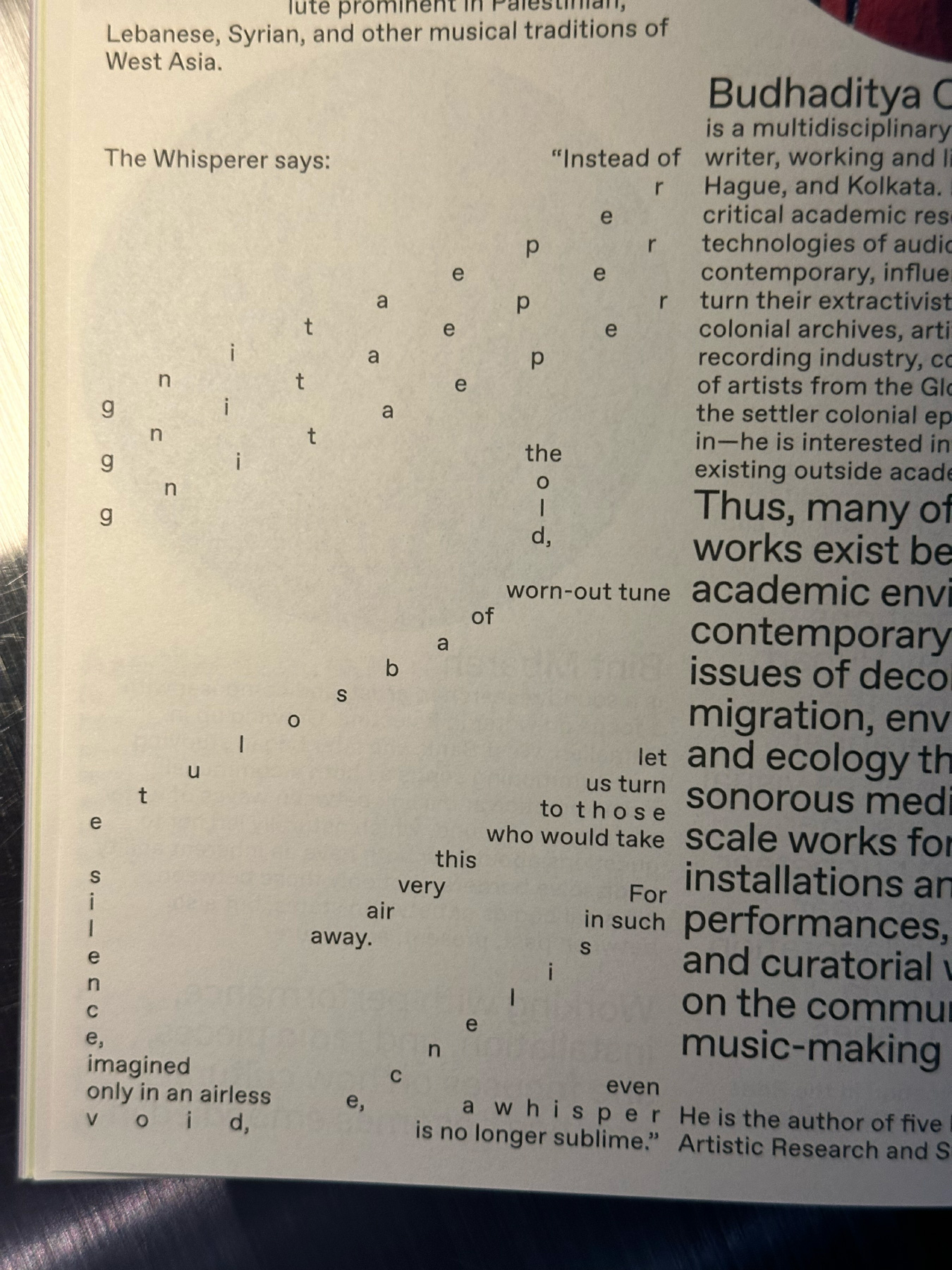
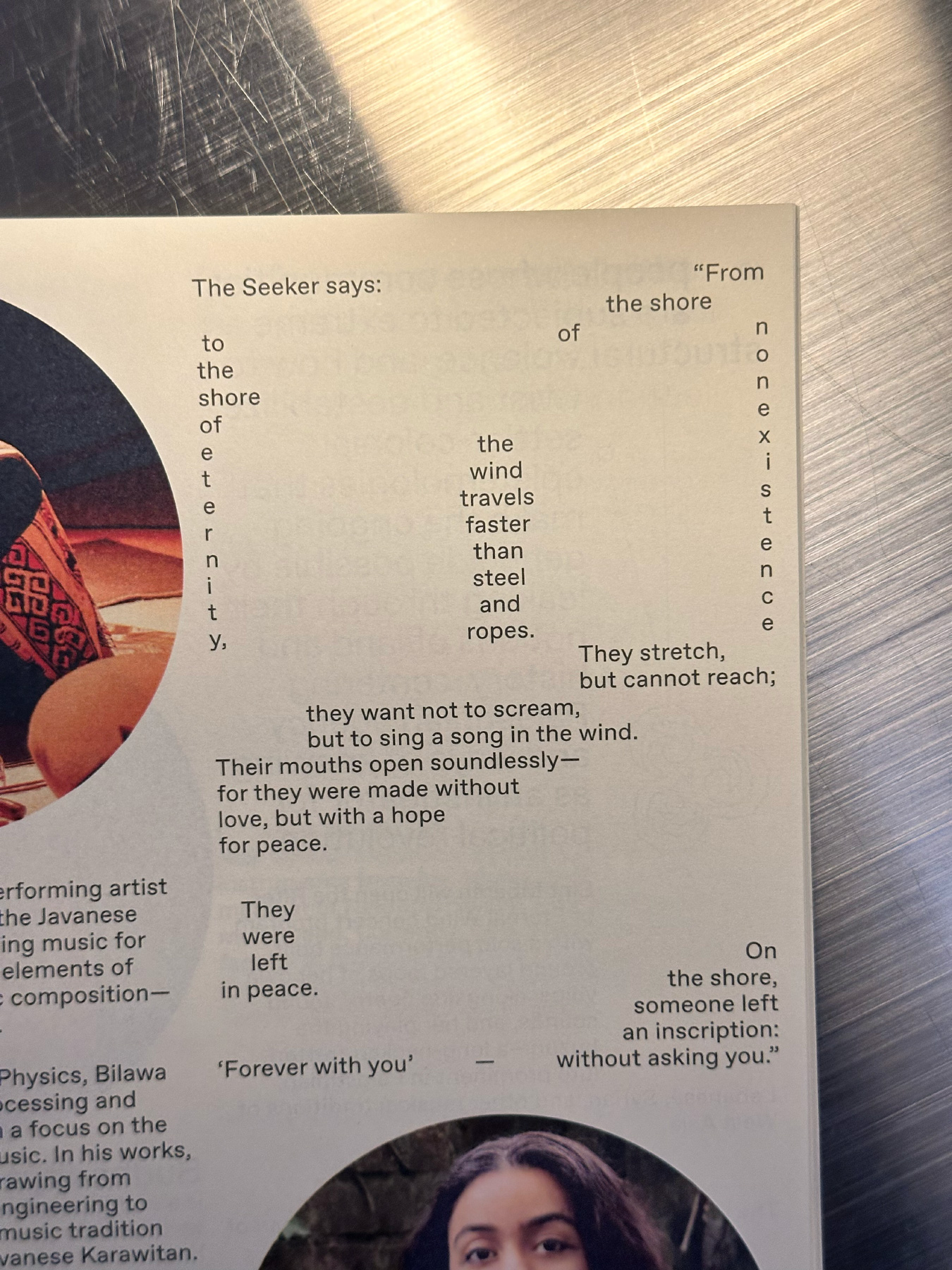
You cannot see wind itself, but you see it move sand, shake feather grass, and shape tree tops. We applied these natural patterns directly to the project typography, making letters float on the wind or outline the curves of desert dunes.
To produce the promotional video, we created time-lapse sequences from satellite photographs of the Karakum Desert and the mountains of southern Kazakhstan. We then played these back on a screen while filming with a phone camera, panning left and right to capture the sweeping, flowing motion of the wind across the landscape.
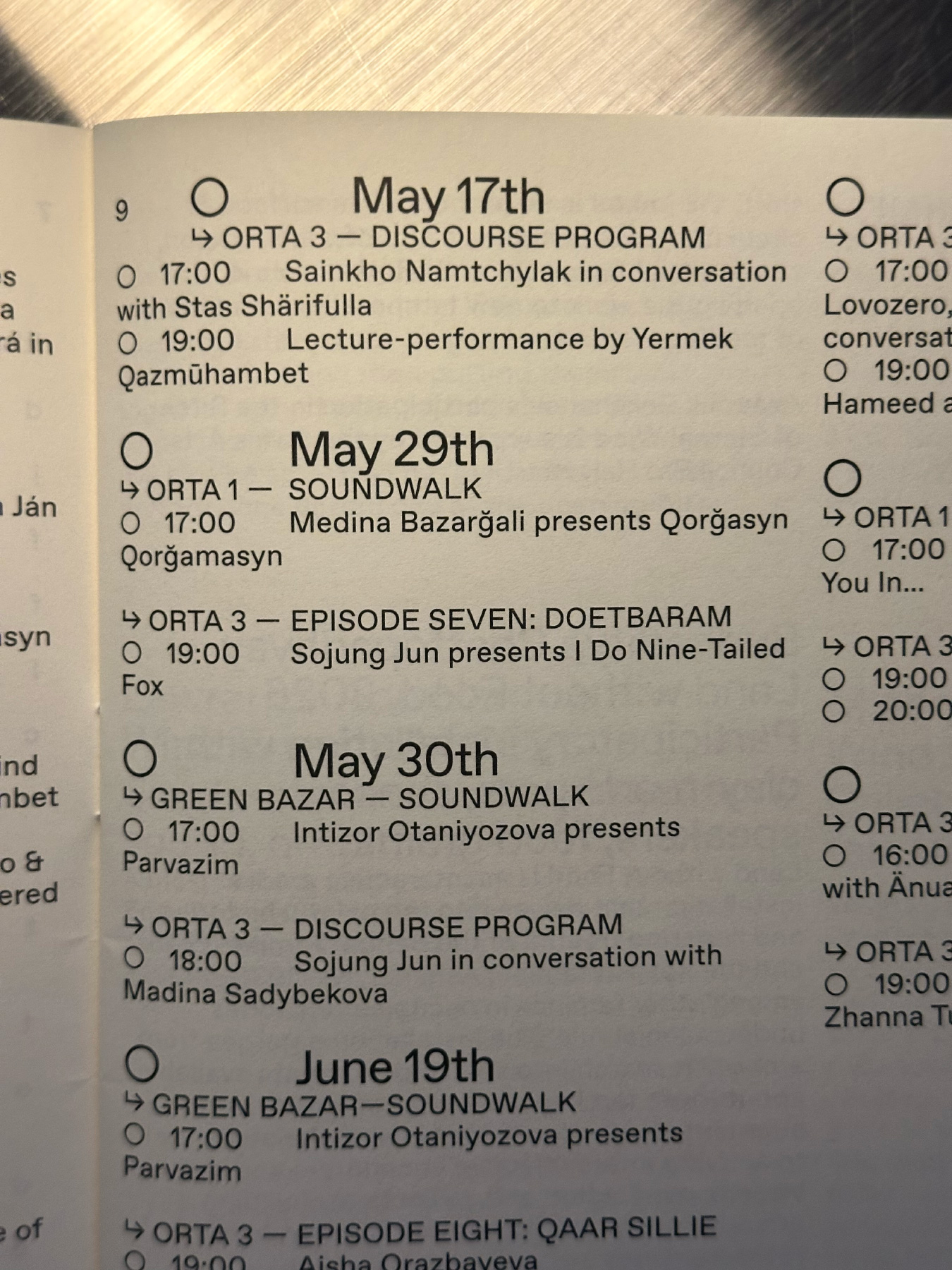
The website reflects the Tselinny Center's commitment to modernity, ensuring the project claims it's place in contemporary art area despite its exploration of timeless and historical subjects. It avoids traditional archival aesthetics in favor of sharp German fonts and strict grids. Within this clean editorial-like layout, Ardak's folk ornaments serve as organic elements, disrupting the rigid typography.
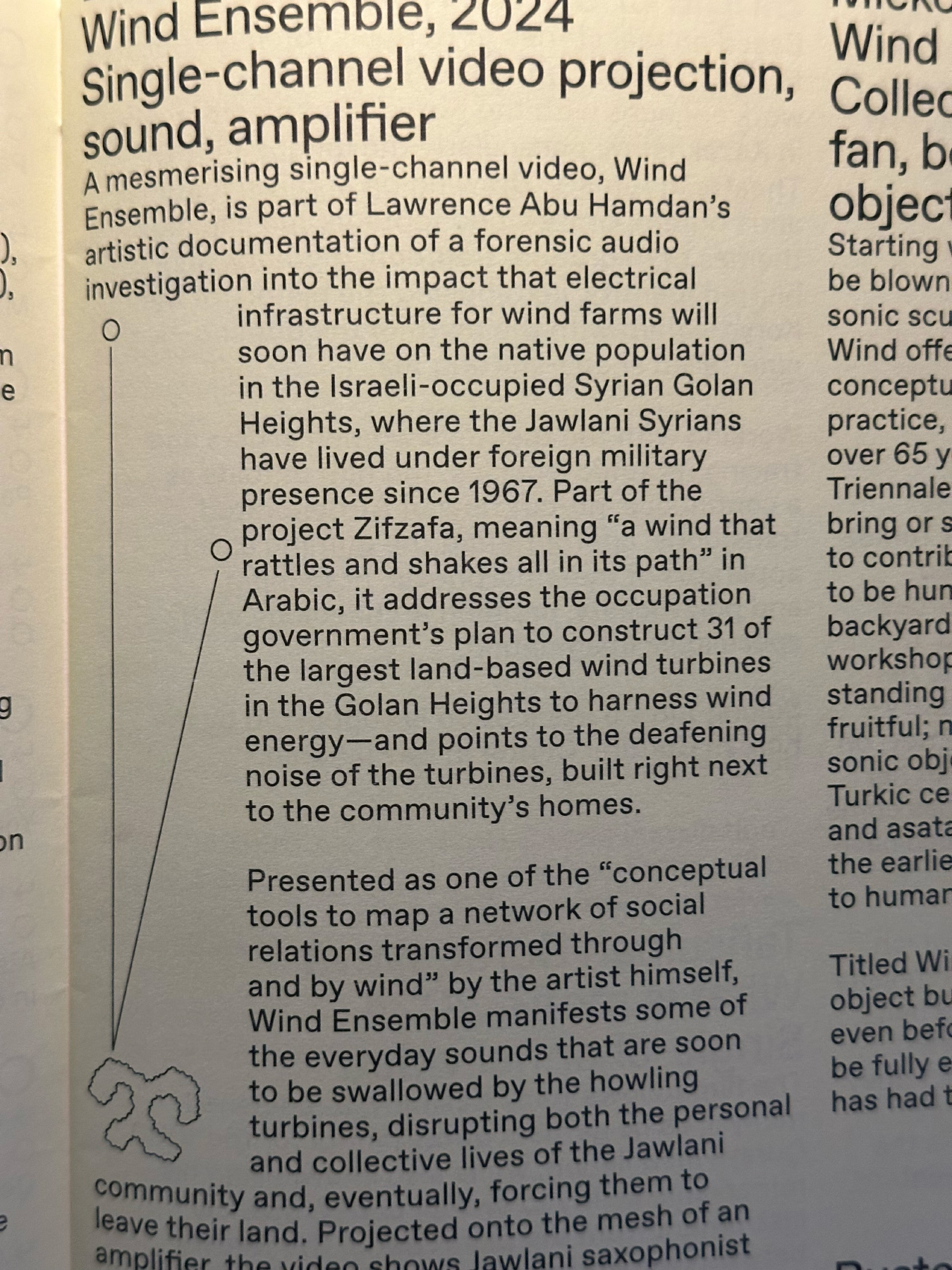
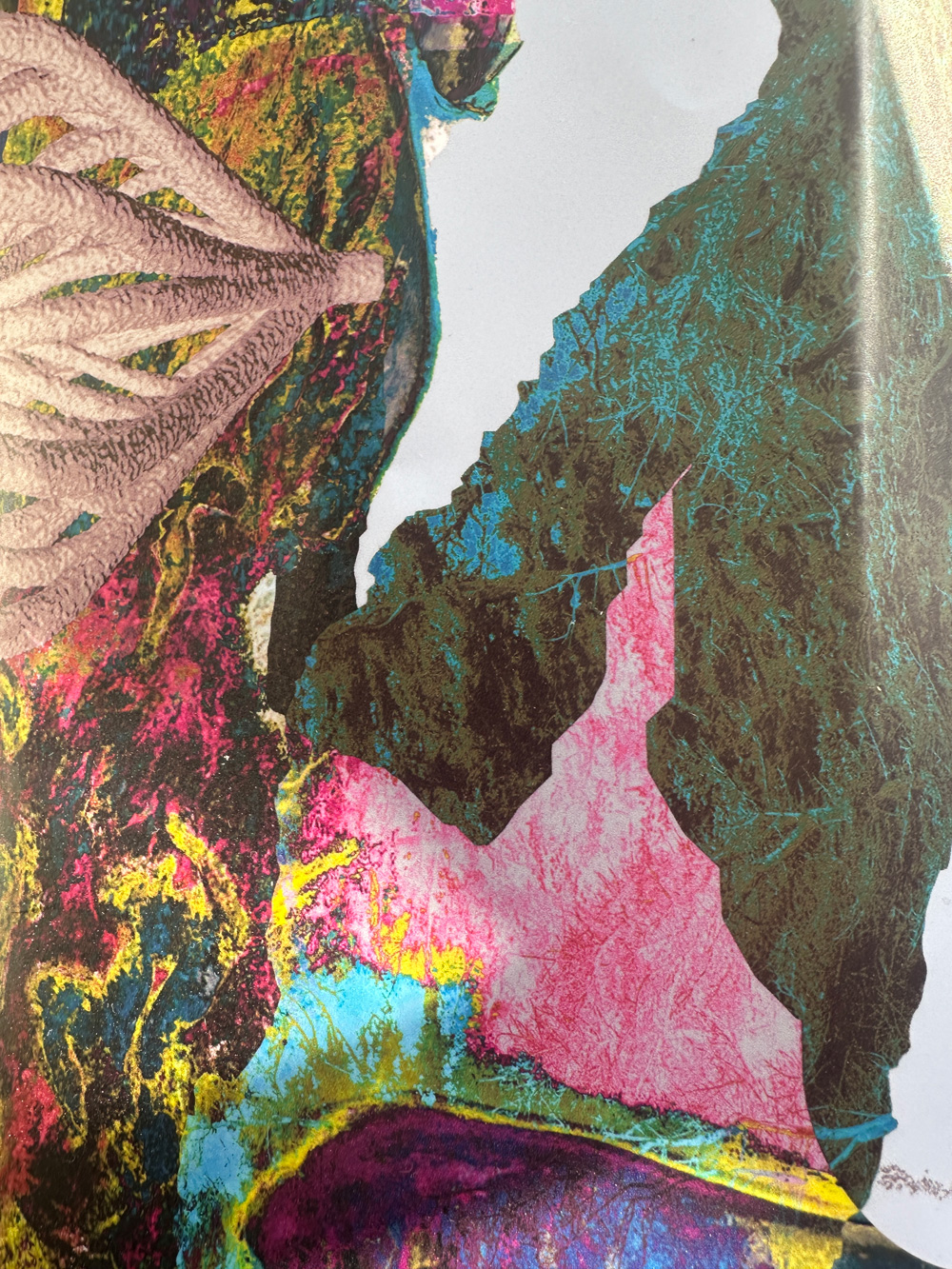
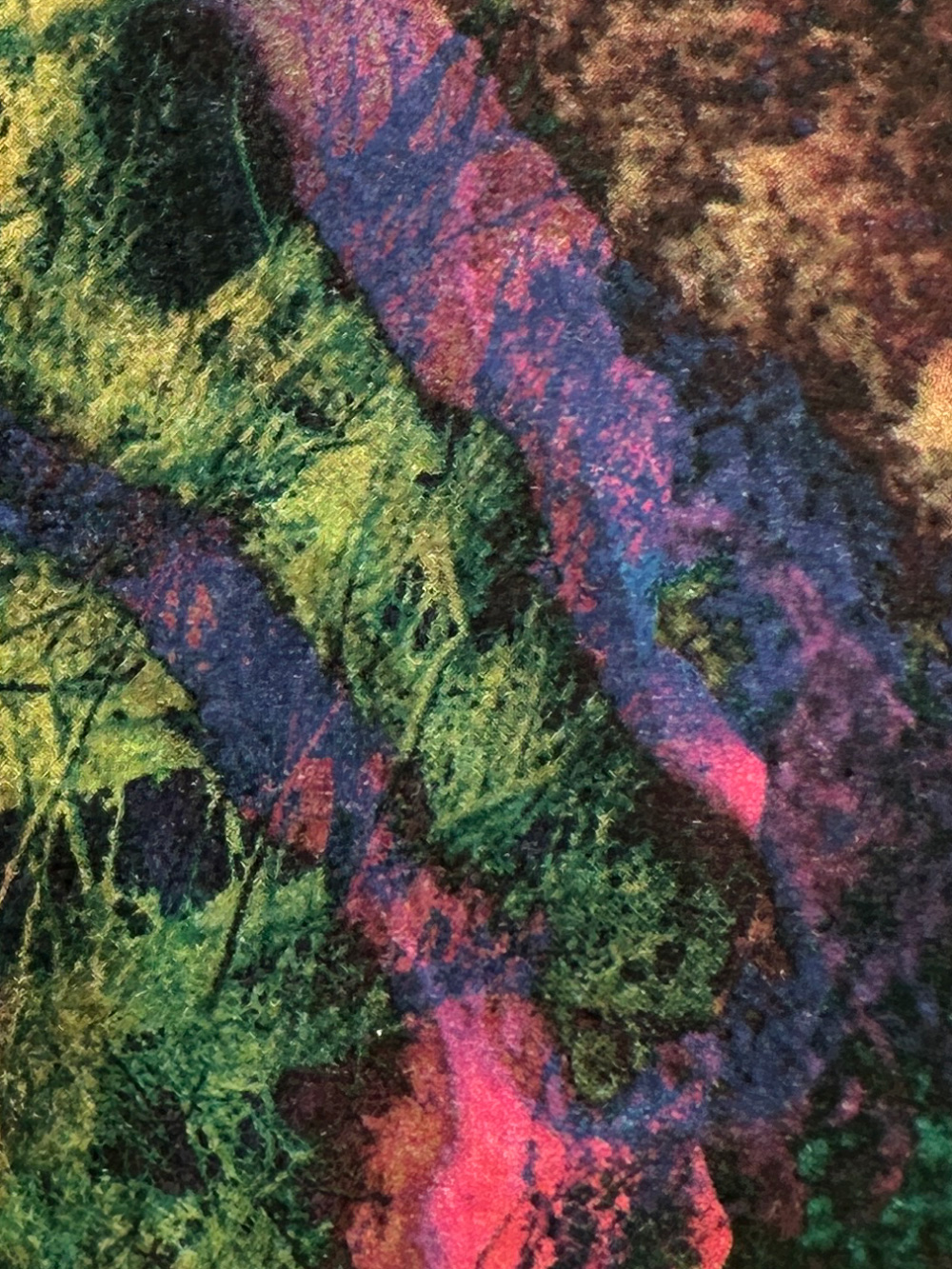
The decorative graphics explores one of the Triennale’s central themes—the politics and tragedy of land—through an abstract, multilayered imagery. By merging satellite photography of Southern Kazakhstan with close-up imagery of steppe flora and landscapes, the design avoids literal representation, instead inviting a contemplation of territory, ecology, and displacement.
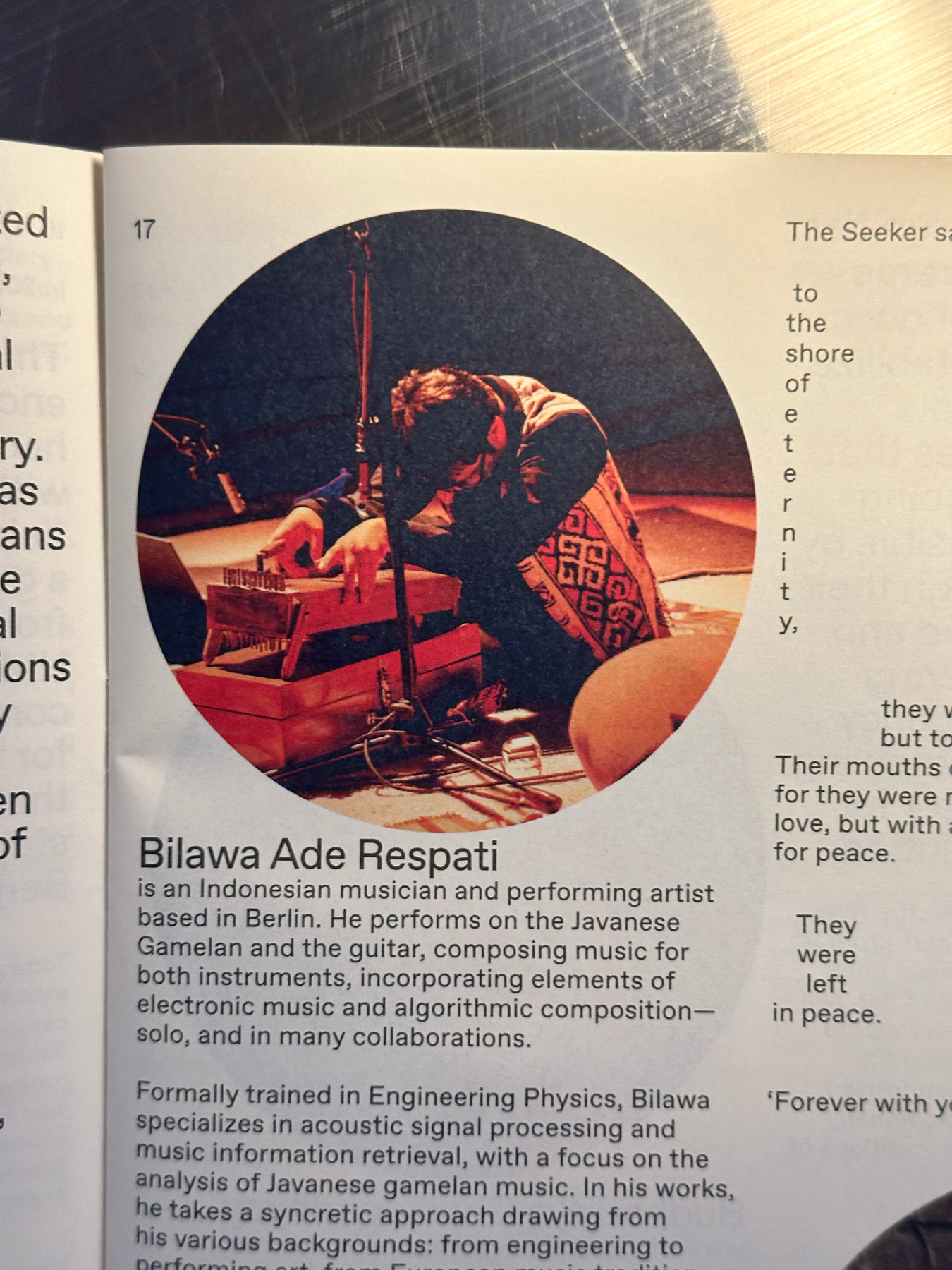
Each artist description is followed by a small poem, laid out as a free-form formal composition. This visual style is designed to resemble the wind interacting with form, whether it's debris caught in the air, stones shaped by natural forces, or dancing leaves.
Project collaborators: Misha Gusev, Ardak Mukanova, Hmot, Anuar Duisenbinov, Madina Sadybekova, Saida Suleimenova, Zhoodar Dzheenbek.